





Japan and UK expand government cooperation on offshore wind and advanced technology
 2026-06-14
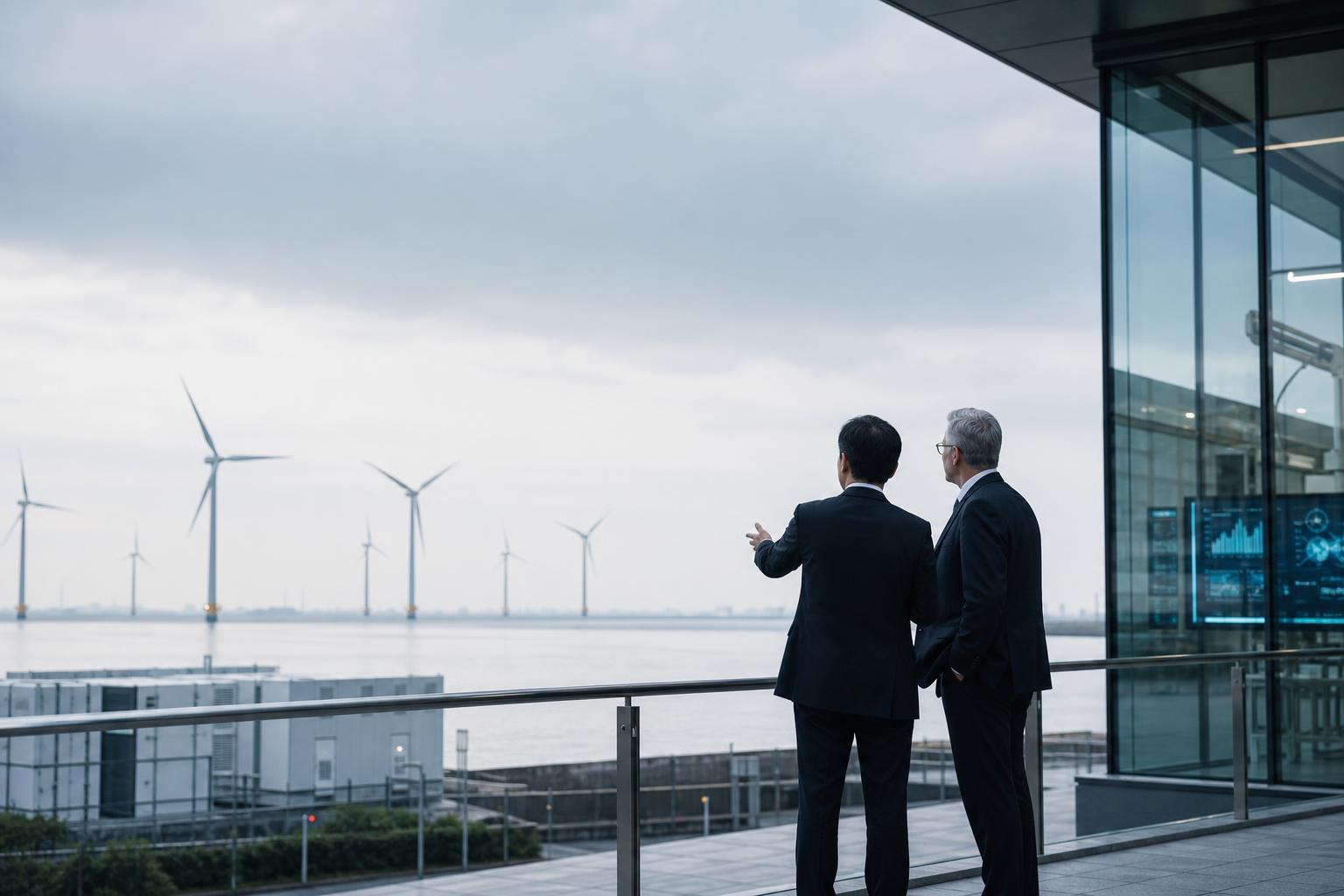
Japanese Prime Minister Sanae Takaichi and Britain's Prime Minister Starmer met on the 14th at the prime minister's office in London and agreed to establish a framework for intergovernmental cooperation on offshore wind power. They will also deepen ties in advanced technology such as artificial intelligence (AI) and in defense.
Focus of the summit
At the outset, they held a one-on-one meeting with only interpreters present, and then discussed matters for about an hour, including talks with officials present. Starmer said, 'There are many issues to discuss in a turbulent world, and it is a great honor to be able to share values and ways of thinking.' Takaichi replied, 'We are both maritime nations, and regional security is inextricably linked. I want to raise Japan-UK relations to an even higher level.' The two leaders addressed each other by their first names, 'Sanae' and 'Keir', showing their closeness.
Putting cooperation into practice on economic security and defense
The two governments will announce the 'Frontier Technology Partnership', which calls for cooperation in advanced technology fields. This will be the first time Japan has compiled a document setting out such a bilateral relationship. In light of turmoil in the Middle East, they will also promote cooperation to secure stable energy supplies. In Britain's offshore wind power sector, Tokyo Electric Power Holdings and others are expected to invest up to 9 billion pounds, or about 1.9 trillion yen, over the next 10 years. Before the talks, the British government announced that Japanese investment in Britain, including offshore wind power, would total 18 billion pounds, or about 3.9 trillion yen.
Japan and Britain will also draw up a summit declaration on economic security. In the nuclear field, the Japan Atomic Energy Agency (JAEA) and Britain's Rolls-Royce will advance research and development on high-temperature gas-cooled reactors. They will also support collaboration between Rapidus, which aims to mass-produce advanced semiconductors, and a British AI startup. Regarding the Global Combat Air Programme (GCAP), in which Japan, Britain and Italy are developing the next fighter jet, the three countries will extend their public-private contract, which is due to expire at the end of June. Starmer said at the start of the meeting that the extension had been agreed, calling it 'an extremely important strategic initiative for both countries'. This could also provide some clarity for a long-term investment plan for defense projects in Britain that has been delayed. They will also establish a new 'Defense Capability and Industrial Council' made up of vice-minister-level officials from Japan's Acquisition, Technology and Logistics Agency and Britain's defense ministry to advance joint development of defense equipment.
Coordinating positions before the G7
Alongside the summit, the two countries will also hold a 'business roundtable' with companies and other stakeholders. On the international situation, they will confirm a policy of strengthening cooperation to realize Japan's vision of a 'Free and Open Indo-Pacific (FOIP)' and will coordinate efforts to ensure safe passage through the Strait of Hormuz. Takaichi chose Britain as her first European destination after becoming prime minister. Starmer visited Japan in January and met Takaichi there. This visit to Britain was at the invitation of the British side, but the talks were held at the prime minister's office rather than at Chequers, the official country residence of the British prime minister outside London. The aim is also to align the two countries' positions ahead of the Group of Seven summit, which begins on the 15th in Evian in eastern France.
Enjoyed this article? Share it with your network!