





Trump says Iran ceasefire deal to be signed on 14th
 2026-06-13
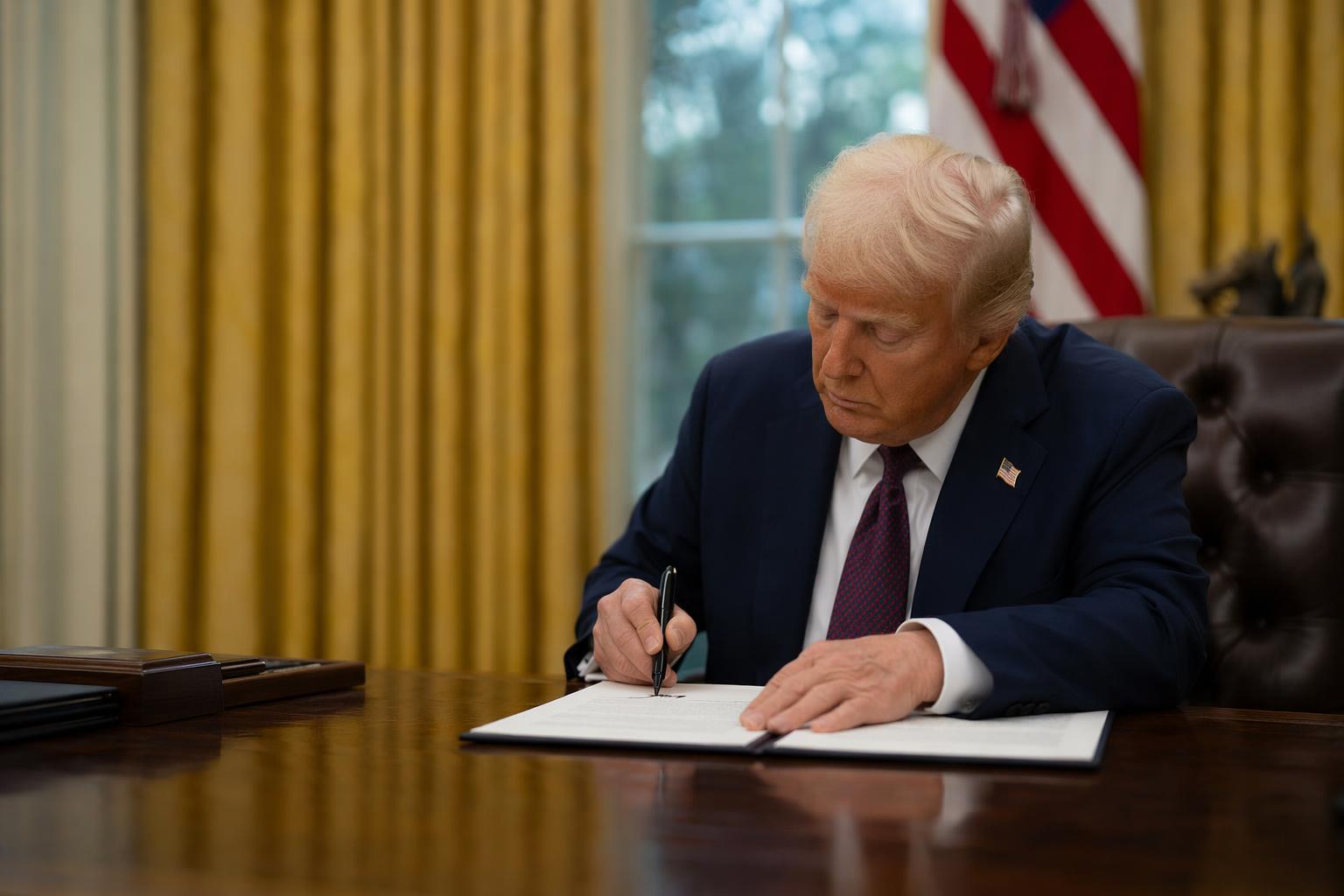
U.S. President Donald Trump posted on social media in the afternoon of the 13th on U.S. Eastern time, early on the 14th in Japan time, that he plans to sign an agreement to end fighting with Iran on the 14th. He reiterated that Iran will not possess nuclear weapons and said the Strait of Hormuz would be 'open to everyone' immediately after signing.
Pakistan prepares electronic signature
Before that, Pakistani Prime Minister Shehbaz Sharif also posted on social media late on the 13th in Japan time that the United States and Iran were expected to reach a deal within 24 hours. He said mediator Pakistan was preparing an electronic signature for the agreement and that technical talks would continue next week.
Gulf remains over nuclear issue
According to Iranian media, a spokesman for Iran's foreign ministry said on the 13th that he did not think the deal would be signed on the 14th. He said there was a possibility it could be signed within days.
Trump said in the post that the agreement with Iran was 'the exact opposite of the nuclear deal under the Obama administration.' He said Iran was no longer pursuing nuclear weapons and that enriched uranium would be retrieved and diluted by the United States at 'the appropriate time.' He also said there would be no exchange of money.
He further said, 'We have the ultimate choice, but we hope it will never be used,' suggesting another attack if the agreement is not implemented quickly. A senior U.S. government official said on the 12th that the draft agreement included the immediate reopening of the Strait of Hormuz and the lifting of the naval blockade by U.S. forces, as well as the scrapping of Iran's nuclear development program and the abandonment of enriched uranium. After the signing, a 60-day negotiating period would be set to continue talks on remaining issues.
Meanwhile, Iranian Foreign Minister Abbas Araqchi said on a television program late on the 12th that the agreement was divided into two stages and that the nuclear issue would not be discussed in the first stage. He said a 'service fee' would be collected in the Strait of Hormuz and that it would be jointly managed with Oman. Local media reported the remarks.
Pakistan and Qatar as mediators
The military conflict between the United States and Iran began on Feb. 28. The U.S. side said it sought to prevent Iran from obtaining nuclear weapons and killed then-Iranian Supreme Leader Ali Khamenei in a large-scale airstrike. Iran effectively blocked the Strait of Hormuz, disrupting traffic through the passage, a key artery for oil transport.
In negotiations aimed at ending the fighting, Pakistan, Qatar and Turkey have played mediator roles. In Pakistan, U.S. Vice President Vance and Iran's parliamentary speaker Mohammad Bagher Ghalibaf and others held direct talks in Islamabad on April 11-12 on achieving a permanent end to the fighting, but the meeting ended without agreement as gaps over nuclear development and other issues remained unresolved. Since then, Pakistan has continued to seek direct talks between the two sides and has kept working toward a ceasefire.
One reason Pakistan is mediating between the United States and Iran is its view that any expansion of military conflict in the Middle East would have a major impact on itself. Pakistan has signed a mutual defense agreement with Saudi Arabia, which is close to the United States, and if tensions between Iran and Saudi Arabia were to intensify, Pakistan may have no choice but to side with Saudi Arabia. With tensions already existing with Afghanistan, there are also concerns that it could be drawn into ethnic- and sectarian-based conflicts in the Middle East.
Its relationship with Trump is also a major factor. Pakistan's military chief, Field Marshal Asim Munir, is said to be one of Trump's 'favorites' and was invited to the White House in the 25th year. Pakistan sent Munir to Tehran, the Iranian capital, in late May to advance coordination.
Enjoyed this article? Share it with your network!