





Listed SpaceX reaches $2.1 trillion market value as Musk fervor continues
 2026-06-13
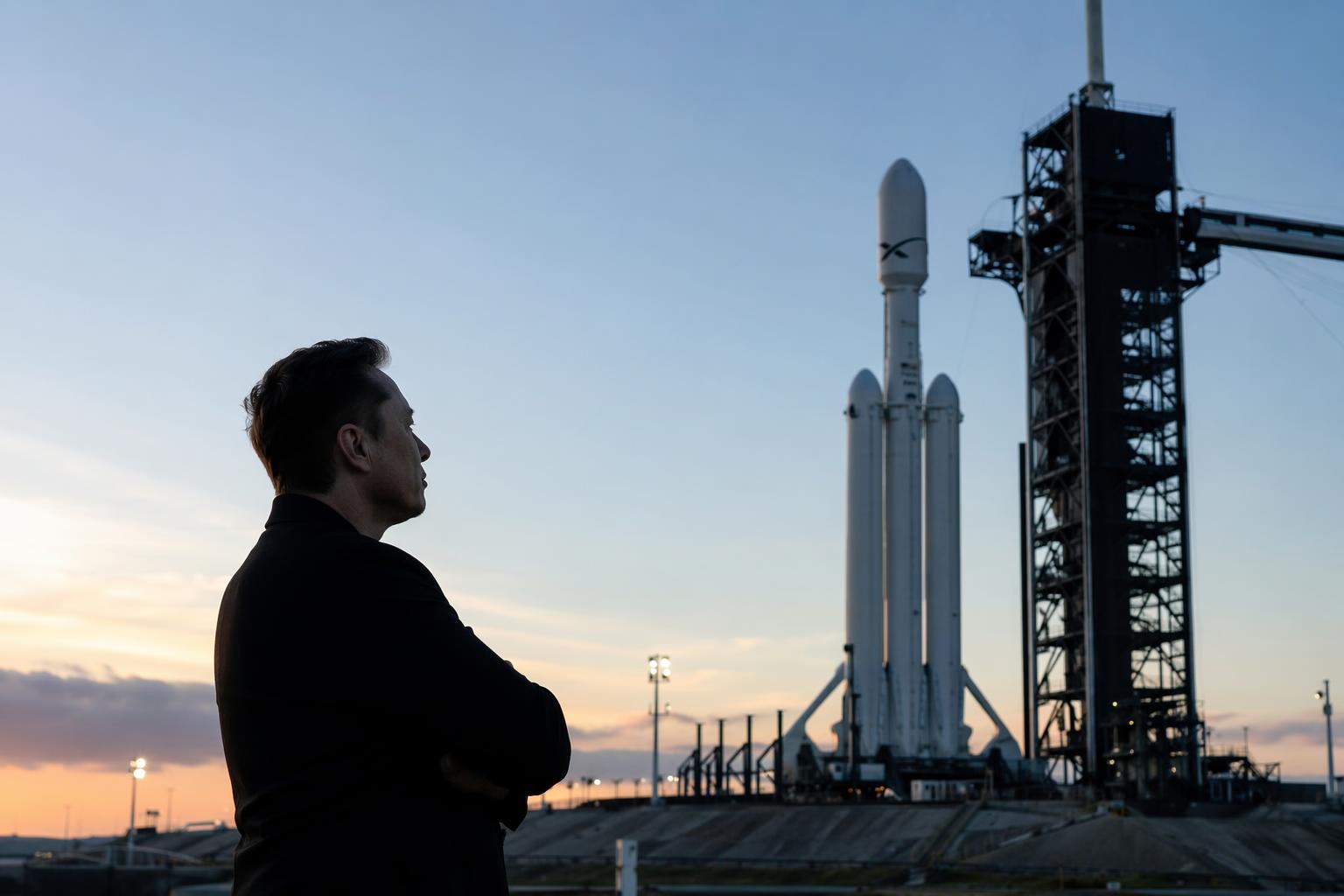
SpaceX lists, opening price tops offer price
U.S. space company SpaceX carried out an initial public offering (IPO) on the 12th. Its shares closed 19% above the offer price, pushing its market capitalization to $2.1 trillion, or about 340 trillion yen. Expectations for Elon Musk led the rally, underscoring once again the investment fervor centered on him.
One of the largest fundraisings ever
Speaking to employees at the company's Texas headquarters on the morning of the 12th, Musk said the small company he started in a warehouse in El Segundo, California, had led to the largest IPO in history. Before talks with institutional investors, SpaceX unilaterally set the offer price and raised a record $75 billion through the issuance of new shares.
Strong demand came from both individual and institutional investors. The intraday opening price before noon was $150, 11% above the offer price, and at one point it approached $180. The closing price was $160.95.
Buying interest surges in Japan too
In Japan, the company raised about 350 billion yen. Mizuho Securities and two other firms entrusted with sales received purchase requests totaling more than 1 trillion yen, about three times the amount offered, from individual investors and others.
Keiichi Nakagawa, 74, of Yokohama said he does not agree with Musk's words and actions, but valued the influence of Starlink and others, and bought SpaceX shares as his first overseas individual stock. Among investors watching trading in front of the Nasdaq exchange in New York were some who had followed the company for more than 10 years.
Market value ranks sixth globally
SpaceX was founded in 2002. It pioneered the private space business through the development of reusable rockets, and its main revenue driver has become the satellite communications service Starlink. In February, it acquired xAI, an artificial intelligence development company that owns the social networking service X, formerly Twitter.
After the IPO, its market capitalization surpassed the $2 trillion milestone, overtaking Taiwan Semiconductor Manufacturing Co. and U.S. Broadcom. It rose to sixth place globally, behind Amazon.com.
'Musk premium' becomes clear
The company has set ambitious goals such as 'human settlement on Mars' and '1 million space data centers.' Investors are linking what may seem like unrealistic plans to Musk's track record of overcoming numerous obstacles in the past.
That valuation is also reflected in the numbers. SpaceX's price-to-sales ratio, calculated by dividing market capitalization by annual sales, stands out at 113 times, compared with an average of 13 times for the other top nine companies.
Going forward, attention will focus on its relationship with Tesla, the electric vehicle giant also founded by Musk. There is a view that the two companies could be integrated to make it easier to secure investment funds. Another proposal calls for Musk's planned mass semiconductor fabrication plant, the TeraFab, to be operated by both companies. If realized, their combined market capitalization would reach $3.6 trillion.
However, strong confidence in Musk also carries risk. Musk holds a large amount of super-voting shares and controls more than 80% of voting rights. A number of institutional investors are passing on the stock over governance concerns.
Whether high expectations can last is the key question
Jay Ritter, professor emeritus at the University of Florida, said companies with higher PSR tend to see their share prices weaken after the first day of trading, and he sees the possibility that SpaceX's shares could remain on a downward trend for several years. A Nikkei survey of 10 major U.S. IPOs since 2010 found that while nine rose on their first day, seven were trading below that level one year later.
On space data centers, seen as a key to growth, Ritter cited technical difficulties and said failure to make them a reality would lead to major disappointment.
Tech dominance deepens further
Technology companies, including SpaceX, are driving the robust U.S. stock market. Nine of the world's 10 most valuable companies are tech firms involved in AI, semiconductors, smartphones and other areas, and eight are U.S. companies.
U.S. Anthropic and U.S. OpenAI both filed prospectuses for listings in June. If both companies go public, their market capitalizations could exceed $1 trillion. The structure of tech dominance appears set to strengthen further.
Enjoyed this article? Share it with your network!