





JAXA successfully launches H3-30 for first time
 2026-06-12
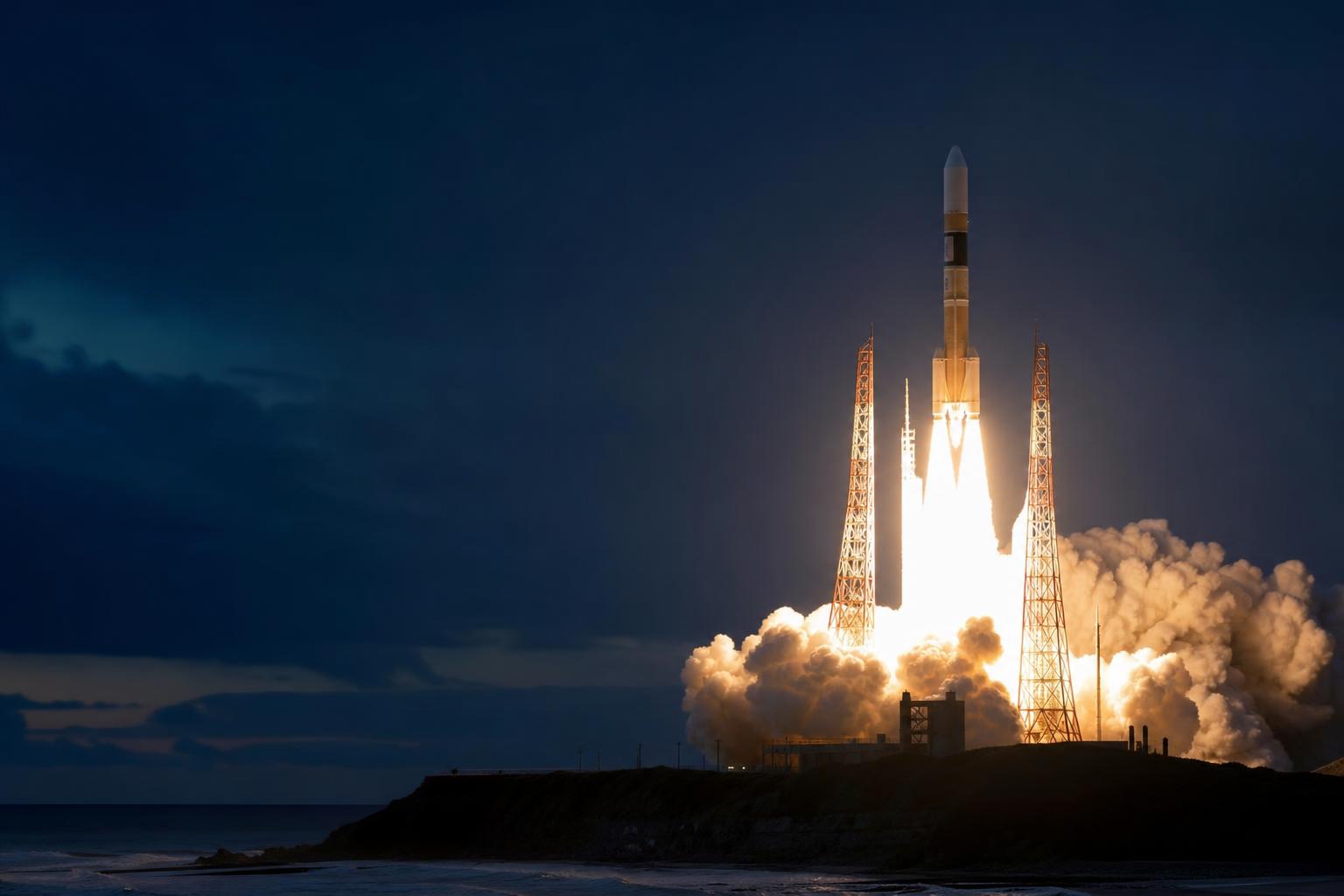
First demonstration of the 30 configuration
The Japan Aerospace Exploration Agency (JAXA) successfully launched Japan's H3 large-core rocket on the morning of the 12th. The previous mission failed in December 2025, and the success rate improved to 75% from 71% after the eighth flight.
The rocket lifted off from the Tanegashima Space Center in Kagoshima Prefecture at around 9:53 a.m., as scheduled. This time, it successfully demonstrated the '30 configuration' for the first time, which does not use solid rocket boosters. The vehicle flies with only liquid-fuel main engines and is regarded as the H3 variant most suited to cost reduction.
Key to international competitiveness
The H2A, the rocket's predecessor, had a high reliability rate with a 98% success rate, but launch costs were said to be 10 billion yen, and it failed to win enough overseas satellite launch contracts. H3 aims to cut launch costs to half those of H2A, and the 30 configuration is seen as a crucial factor in determining its international competitiveness.
H3 also has the '22 configuration', with two main engines and two solid rocket boosters, and the '24 configuration', with two main engines and four solid rocket boosters, both of which have been successfully launched. With the success of the 30 configuration, all variants are now in place.
After failing on its debut flight in 2023, H3 had built up a string of successes, but it failed again in December 2025. So far, seven H3 rockets have been launched, with two failures.
At a briefing on May 13, JAXA launch manager Makoto Arita said, 'This is a challenge that will determine H3's revival through the resumption of launches. If we cannot overcome this hurdle, H3 has no future.'
Cause checked with test vehicle
This time, no large satellite was carried; instead, a dummy satellite was loaded to confirm whether the rocket could reach the planned orbit. The mission was judged a success if the vehicle entered the intended orbit when the second-stage engine burn ended, 15 minutes and 15 seconds after launch.
On the previous rocket, the satellite on board separated from the launcher earlier than expected. The cause was a manufacturing defect: a crack had formed in the joint of the mount holding the satellite. The crack widened when the satellite fairing was separated, leading to the failure.
This time, that section was repaired and reinforced, and measuring equipment was also installed to help identify the cause of the previous failure.
H3 must launch at least three probes and satellites, including a Mars probe, during fiscal 2026, and this success was essential for the full resumption of operations.
Enjoyed this article? Share it with your network!