





Sharp drop in China rare earth exports to Japan amid frayed ties
 2026-06-08
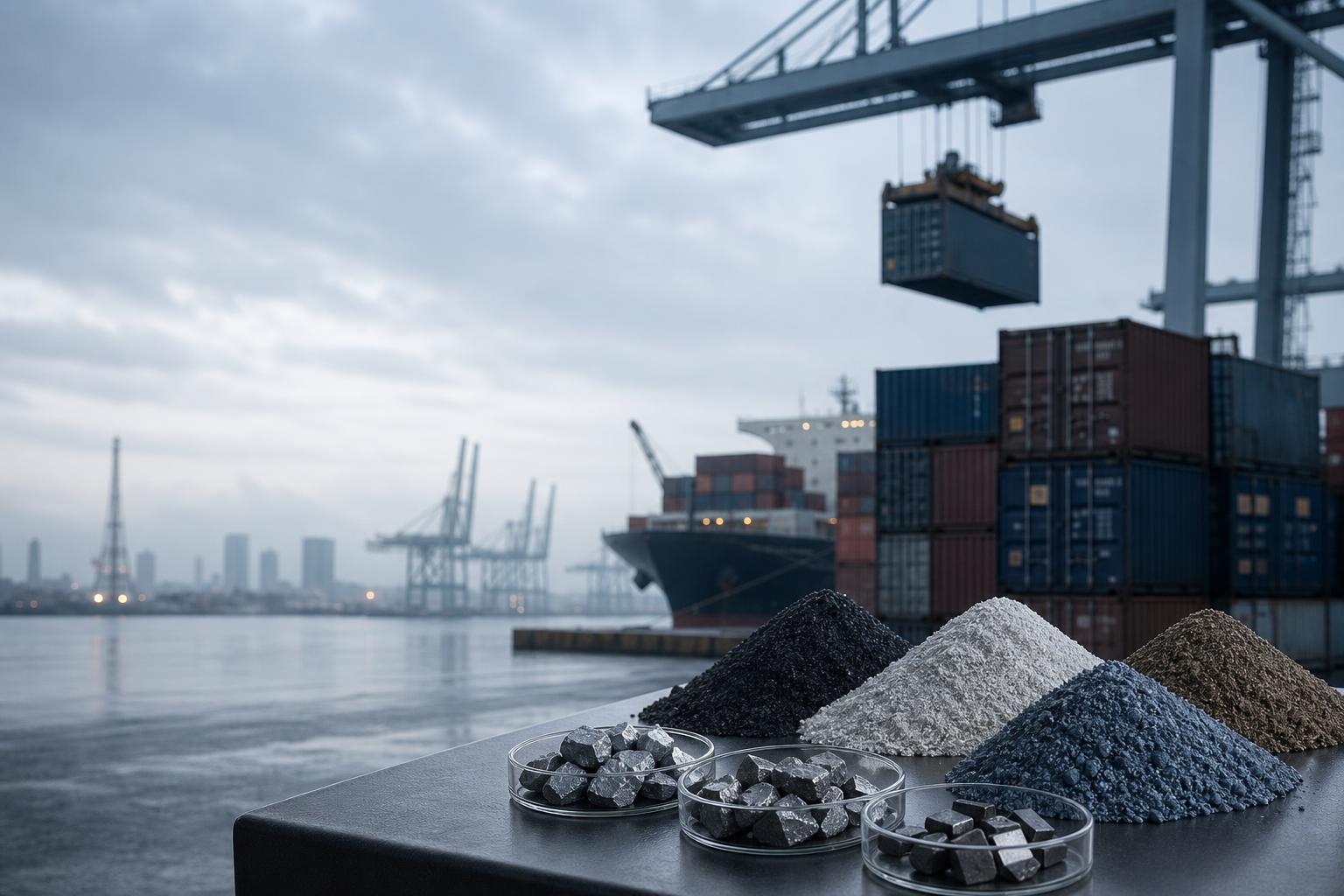
China's rare earth exports to Japan have plunged. Against the backdrop of worsening China-Japan ties, export volumes in March and April fell more than 80% from a year earlier. Japanese companies are rushing to diversify supply sources to secure materials essential for making cars and high-tech products, including from Australia and India.
Combined exports of seven rare earths down 34% in Jan-Apr
China has since January tightened controls on exports to Japan under dual-use regulations. The move came as China sought to step up economic pressure through rare earths, of which it accounts for 70% of global output, following Prime Minister Sanae Takaichi's Diet remarks in November 2025 on a Taiwan contingency.
In April 2025, China's Ministry of Commerce introduced export controls on seven rare earths, including dysprosium and terbium, and published 10-digit tariff numbers, or HS codes, that break down the scope of the restrictions. Nikkei extracted selected items based on this and analyzed 8-digit data searchable in trade statistics from the General Administration of Customs of China.
Combined exports of the seven rare earths to Japan in January-April 2026 fell 34% from a year earlier. The decline has accelerated recently, with March down 88% and April down 82%. The monthly drop exceeded the 42% fall in May 2025, the month after controls on the seven rare earths were introduced.
Heavy rare earth supply cut off
By item, dysprosium and terbium, both indispensable for electric vehicle motors and other uses, have seen zero exports to Japan since January 2026. After the controls began in April 2025, shipments were temporarily delayed but had been recovering by the end of 2025 as tensions between Washington and Beijing eased, only for worsening China-Japan ties to hit demand later.
The decline in yttrium is also severe. It is considered essential for laser medical devices, semiconductor manufacturing equipment, and the aerospace sector, and is difficult to replace. Exports to Japan in January-April fell more than 90% from a year earlier.
A senior official at the China Japan Chamber of Commerce, which represents Japanese companies operating in China, says China eased export restrictions following the China-Japan summit in October 2025 and other developments, but added that 'from 2026, government-to-government exchanges stopped, and temporary exports to Japan also disappeared'.
Exports of magnets using rare earths subject to controls have also become harder. A senior Japanese company executive said export permits for high-performance magnets containing dysprosium and other materials are almost never approved. China is also said to account for more than 90% of the global market in refining ore to extract rare earths and in processing them into alloys and other materials.
Japanese companies diversify sourcing
Japanese companies are stepping up alternative procurement from outside China. JX Advanced Metals is investing in a deposit in Australia, which has large rare earth reserves. Proterial, formerly Hitachi Metals, is considering building a neodymium magnet plant in India that would not use heavy rare earths.
Australia ranks third in the world for rare earth production, while India ranks sixth. Recycling is another option. Mitsubishi Materials has recently decided to invest in a U.S. company with reuse technology.
Still, substitution is not easy. A China-based executive at a major Japanese manufacturer worries that if the current situation persists, it could disrupt production in Japan and force factories to stop. To avoid such a scenario, some companies have begun assembling electronic components such as motors locally before exporting them to Japan.
The Japanese government is watching closely for any move by companies facing supply shortages to shift production bases to China. This stems from the view that when China briefly halted rare earth exports to Japan during the 2010 China-Japan dispute over the Okinawa Prefecture-administered Senkaku Islands, Japanese companies expanded local production in the magnet sector, helping Chinese manufacturers rise.
China made its strategic intent clear in 1992, when Deng Xiaoping, who had advanced reform and opening up, said that 'the Middle East has oil, and China has rare earths'. In August 2023, it introduced export controls on gallium and other materials used in semiconductors, and in December 2024 it enforced regulations on exports of dual-use goods. Since then, exports of rare-earth magnets and other items to Japan have required detailed information such as end use, the purchasing company and whether re-exports are involved.
As U.S.-China tensions intensified in April 2025, China added seven rare earths to the list of controlled items, affecting Japan as well. It also tightened overseas shipments of magnets, and production of some models was temporarily halted at Suzuki's domestic plant. Even after the export control announcement in January 2026, checks on end use remain strict, with some saying imports via third countries are difficult.
Enjoyed this article? Share it with your network!