





Typhoon No. 6 Lands in Southern Wakayama, Special Flood Warning for Kozagawa
 2026-06-02
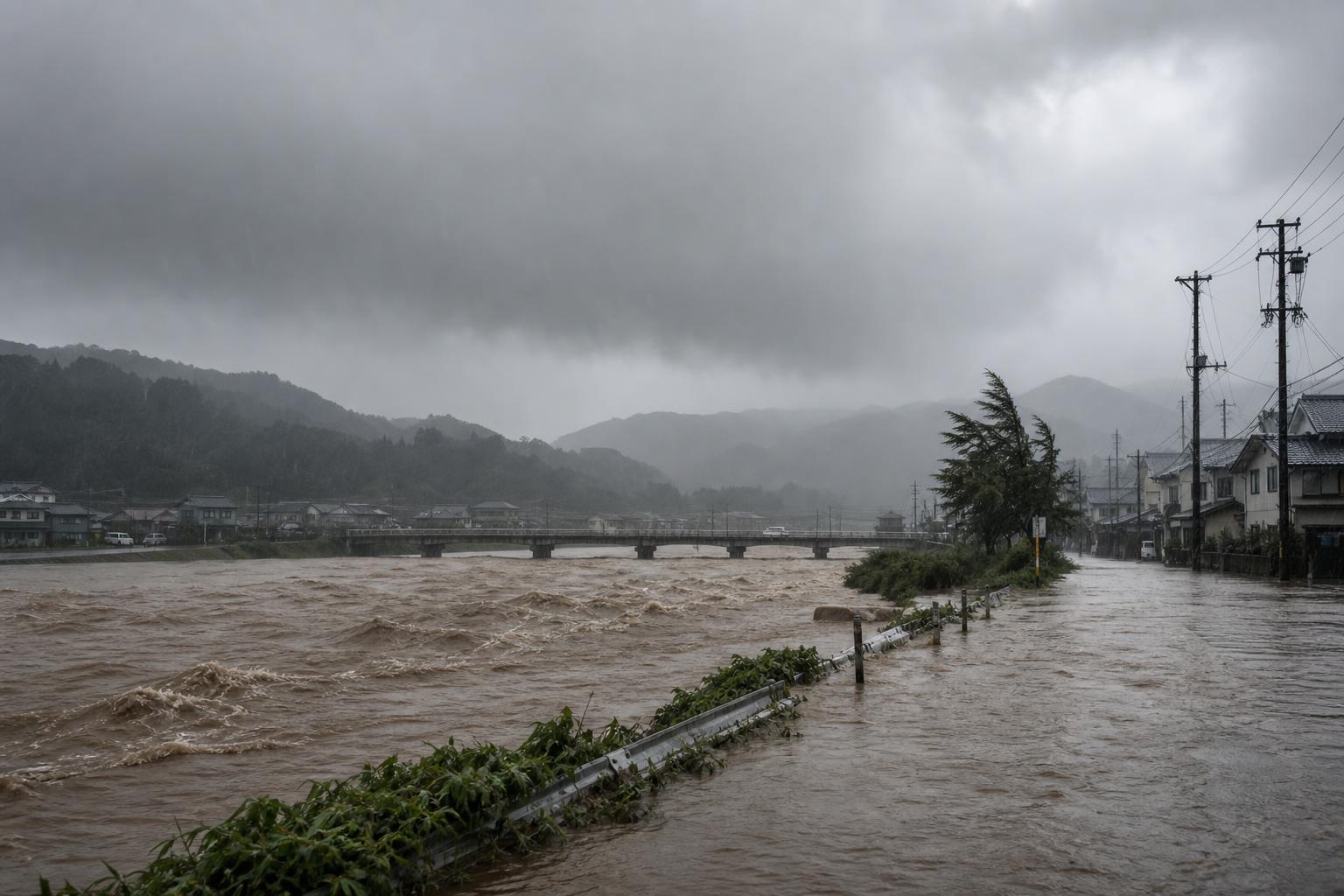
Typhoon No. 6 made landfall in southern Wakayama Prefecture around 4:30 a.m. on the 3rd. The Japan Meteorological Agency issued a Level 5 special flood warning for the Kozagawa River in the prefecture. It is the highest alert level under the new disaster weather information system launched in May, and the first time it has been issued.
Special warning for Kozagawa River
The Japan Meteorological Agency said it had confirmed flooding and called on people to check evacuation information from municipalities and take appropriate disaster prevention actions, such as ensuring their safety. As of 4 a.m. on the 3rd, Typhoon No. 6 was moving east-northeast at 40 kph near Tanabe, Wakayama Prefecture. Its central pressure was 980 hectopascals, with maximum sustained winds near the center of 25 meters per second and peak gusts of 35 meters per second.
Heavy rain and transport impact
Typhoon No. 6, moving along the Pacific side of eastern Japan, could trigger a linear rain band that brings localized torrential rain to the Tokyo metropolitan area, including Tokyo, Kanagawa and Chiba. According to the Japan Meteorological Agency, 24-hour rainfall through 6 a.m. on the 4th is forecast to reach 200 mm in some parts of Kanto-Koshin and Tokai, and 120 mm in Tohoku. If a linear rain band develops, the risk of heavy-rain disasters could rise sharply, and the agency is urging strict caution over landslides, flooding in low-lying areas and river flooding.
In preparation for heavy rain and strong winds from the typhoon, Chiyoda, Koto and Shinagawa wards of Tokyo and other municipalities decided to temporarily close elementary and junior high schools. Some schools in Saitama and Chiba prefectures have also been closed.
Disruptions are also spreading to transport services. According to JR Central, the Tokaido Shinkansen has been operating normally since the first train on the 3rd, but cancellations and long suspensions of service may occur, mainly on morning trains. JR East suspended service on some sections of local lines including the Tokaido Line, Chuo Line and Shonan-Shinjuku Line. JR West will halt operation for the entire day on some sections of local lines from the first train.
Japan Airlines will cancel more than 320 flights on the 3rd, mainly services connecting Haneda with destinations across Japan. All Nippon Airways has also decided to cancel more than 280 domestic and international flights combined. According to Central Nippon Expressway, some sections of the Tomei Expressway and Chuo Expressway may be closed to traffic.
The Japan Meteorological Agency also issued a Level 4 flood risk warning for the Hiroto and Sakatani rivers in Miyazaki Prefecture, a Level 4 heavy rain risk warning for western Kochi Prefecture, and a Level 4 landslide risk warning for parts of Wakayama and Tokushima prefectures. This is also the first time such risk warnings, which call for everyone to evacuate dangerous areas, have been issued.
Enjoyed this article? Share it with your network!