





Level 4 Warnings in Miyazaki and Western Kochi as Typhoon 6 Brings Heavy Rain
 2026-06-02
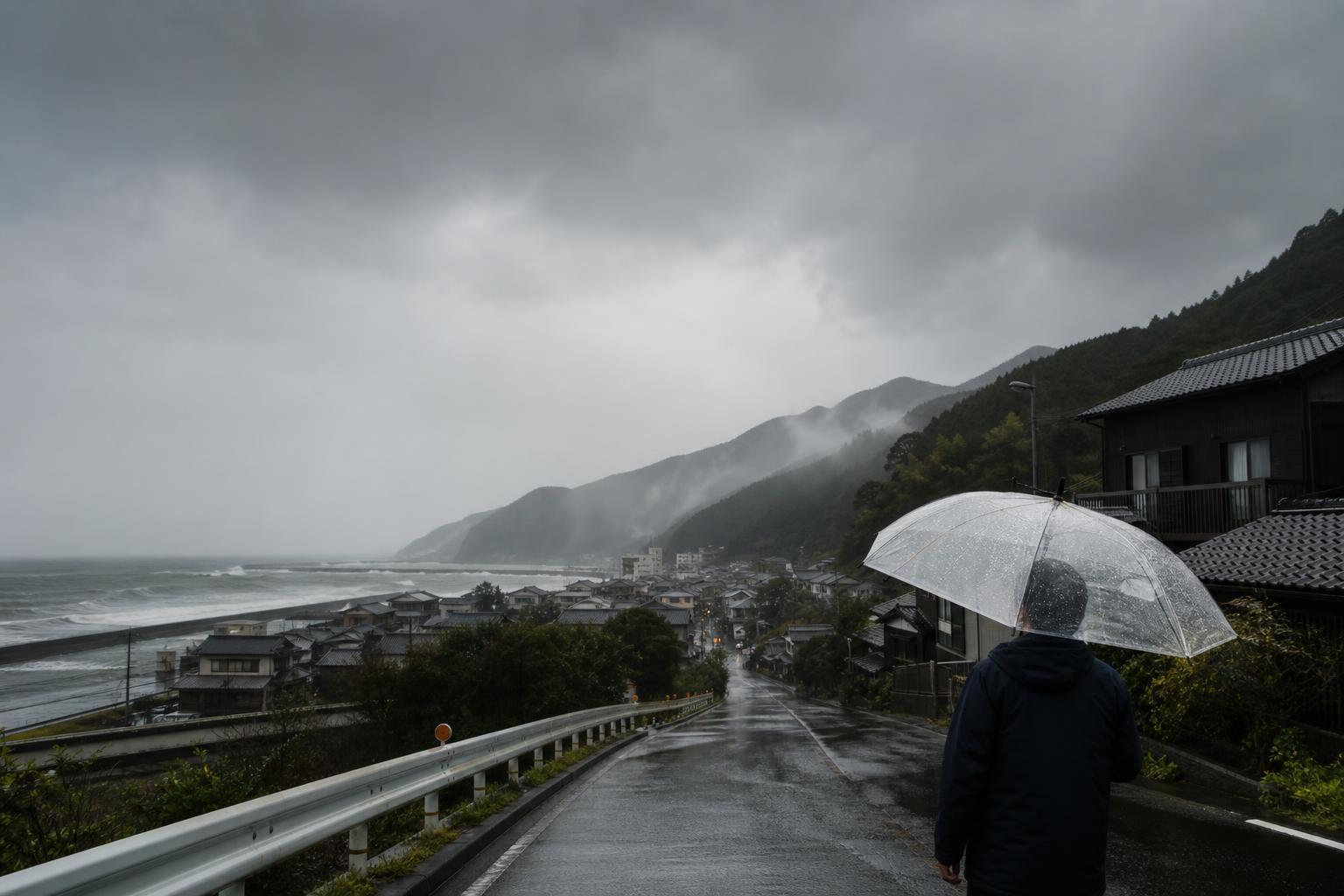
The Japan Meteorological Agency on Tuesday issued flood risk warnings for the Hirowatari and Satokoya rivers in Miyazaki Prefecture as heavy rain accompanied the approach of Typhoon 6. It urged all residents to evacuate from dangerous areas, warning of possible flooding from levee breaches and other causes. It also issued a heavy rain risk warning for western Kochi Prefecture.
First Level 4 Warning
According to the agency, it was the first such warning since the new disaster weather information system began operating in late May. Typhoon 6 is expected to approach the Pacific coast from western to eastern Japan, and linear rain bands could develop in Aichi, Shizuoka and Wakayama prefectures through Wednesday. Heavy rain at warning level may also hit the Kanto-Koshin region, including Tokyo.
Transport and Schools Also Hit
For the 24 hours through 6 p.m. Wednesday, rainfall is forecast to reach as much as 350 millimeters in Tokai, 300 millimeters in Kanto-Koshin and Kansai, 250 millimeters in Shikoku, and 100 millimeters in northern Kyushu and Tohoku. As of 8 p.m. Tuesday, Typhoon 6 was moving northeast at 40 kph about 90 kilometers south-southwest of Ashizuri Cape in Kochi Prefecture. Its central pressure was 980 hectopascals, with maximum sustained winds near the center of 25 meters per second and peak gusts of 35 meters per second.
Disruptions also spread to transport services. East Japan Railway said it would suspend operations on Wednesday in some sections, including the Tokaido and Chuo lines. JR Central said it would not carry out any planned suspension of the Tokaido Shinkansen, but sudden cancellations or service suspensions could occur mainly from the first trains through the morning. Japan Airlines canceled more than 320 flights on Wednesday alone, mainly those connecting Haneda with other destinations, while All Nippon Airways decided to cancel more than 280 domestic and international flights.
According to the education ministry, 27 schools in five prefectures, including Miyazaki and Okinawa, reported damage such as roof damage as of noon Tuesday. More than 1,000 schools in 14 prefectures and metropolitan areas were closed or shortened classes.
Disaster Information Recast into Five Levels
The disaster weather information system newly launched by the Japan Meteorological Agency sorts out the many overlapping warnings and shows risk levels in five stages using numbers and colors. For the four types of disasters — river flooding, heavy rain, landslides and storm surges — it sets out Level 5 special warnings, Level 4 warnings, Level 3 alerts and Level 2 advisories, in descending order of danger.
Level 5 is shown in black and indicates a life-threatening situation requiring immediate action to secure safety. Level 4 is shown in purple and marks the stage when everyone should evacuate from dangerous areas. It is important to secure safety before a Level 5 special warning is issued, as disaster may already be occurring.
Enjoyed this article? Share it with your network!