





Food tax cut to 1%: PM Takaichi may decide this month
 2026-06-02
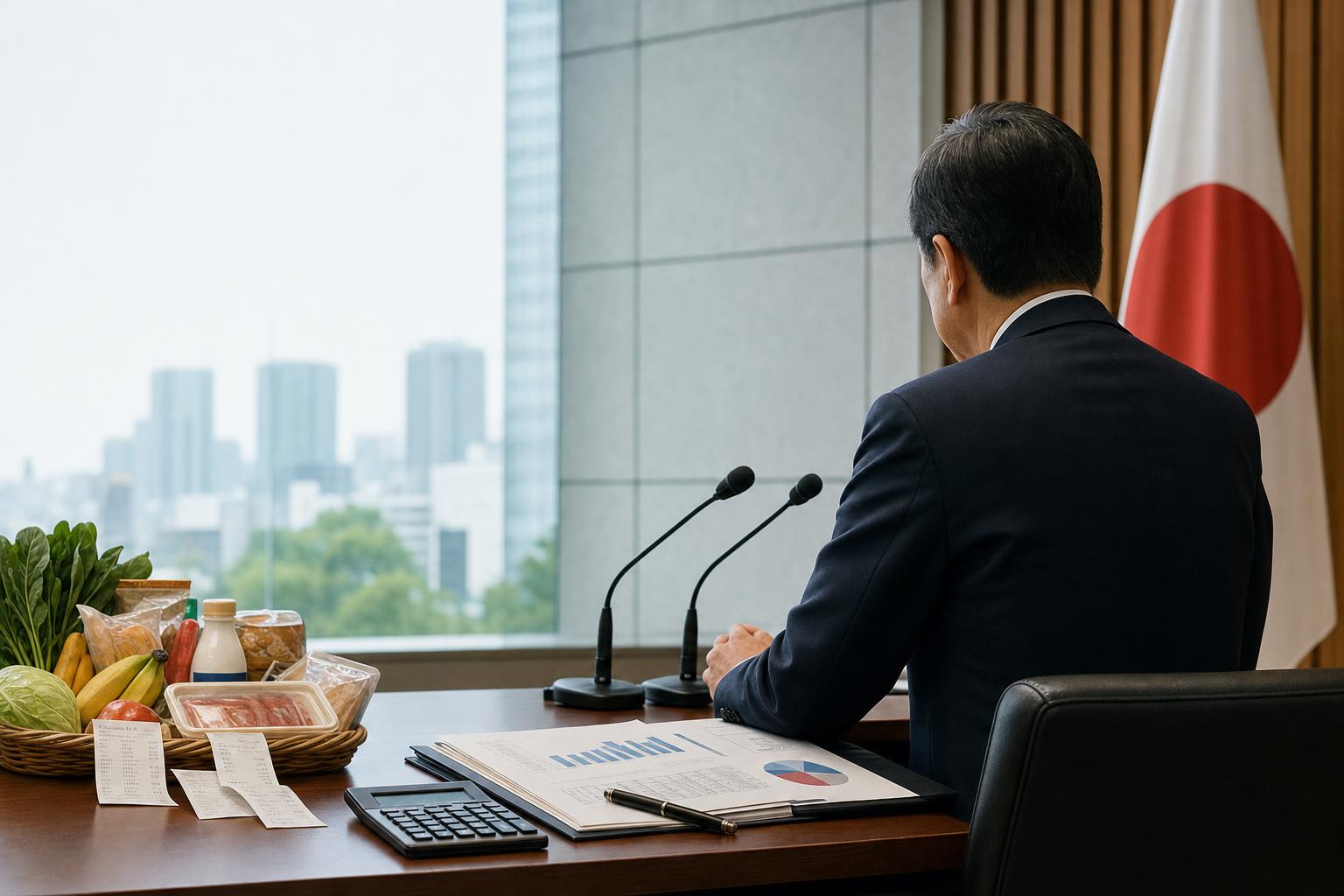
Prime Minister Sanae Takaichi will decide within the month whether to adopt a plan to set the tax rate on food items at 1% from April 2027 as part of a consumption tax cut. Based on the government's view that a 1% rate would limit cash register system upgrades to 'about five to six months at most', she is making final adjustments.
Outlook for register upgrades
At a working-level meeting of the Social Security National Conference on the 3rd, the Ministry of Economy, Trade and Industry will present its view on the time needed to upgrade cash registers. In an outline compiled by the ministry, it said that, based on interviews with retail industry groups and regional department stores and supermarkets, 'most would be able to respond within six months if the tax rate is 1%'.
Comparison with a 0% plan
If the consumption tax rate on food items were cut to 0%, as pledged in the Liberal Democratic Party's lower house election platform, cash register upgrades would take 'as much as 10 months to around a year'. At 1%, the ministry says there would be no need for impact surveys or system changes related to the 'special nature of 0%', cutting the response period to about half.
System design and funding
The Social Security National Conference is scheduled to wrap up discussions on the design of the consumption tax cut within June. The prime minister will announce the final response based on the conference's report. Within the government and ruling coalition, there are views that early implementation should be prioritised in response to higher crude oil prices stemming from the worsening situation in the Middle East, and support for a 1% rate is strong in some quarters.
A senior government official said on the 2nd that on a 0% rate, 'no matter how much time is spent on upgrades, concerns remain that system problems could still occur', indicating that the 1% plan is the leading option. The prime minister herself is also positive about early implementation. At a party leaders' debate on May 20, she said, '(The tax cut) should be done as quickly as possible, and speed is important.' Around the end of May, she told those around her that she would 'place importance on balancing speed and sufficiency'.
Within the administration, some were concerned that even if the rate were set at 1%, it might not be consistent with the LDP's call to 'accelerate consideration of a zero consumption tax rate for a limited two-year period'. On the other hand, opinion polls in May by news organisations showed many respondents wanted early implementation without insisting on 0%, and some see the possibility of a policy shift. A 'de facto zero' plan, in which the 1% portion would be returned through subsidies and other measures, has also emerged.
Within the government, there is a view that if the rate is set at 1%, submitting related legislation to an extraordinary Diet session in the autumn would make it possible to implement the cut in spring 2027. Securing funding remains a challenge, however. If the consumption tax rate on food items were cut to 0%, about 5 trillion yen a year would be needed, and even at 1%, funding in the 4 trillion yen range would still be required annually. One proposal would be to avoid increasing new government bond issuance from the previous fiscal year, but because it assumes higher tax revenue from economic growth, doubts remain about its feasibility.
Supplementary budget handling
Past administrations often compiled supplementary budgets with economic measures ahead of autumn extraordinary Diet sessions. However, a senior government official indicated that for autumn 2026, no supplementary budget including large-scale economic measures is expected. From fiscal 2027 onward as well, the policy is to limit supplementary budgets to cases of unavoidable urgency.
Enjoyed this article? Share it with your network!