





At Shangri-La meeting, Hegseth urges China deterrence and allied burden-sharing
 2026-05-30
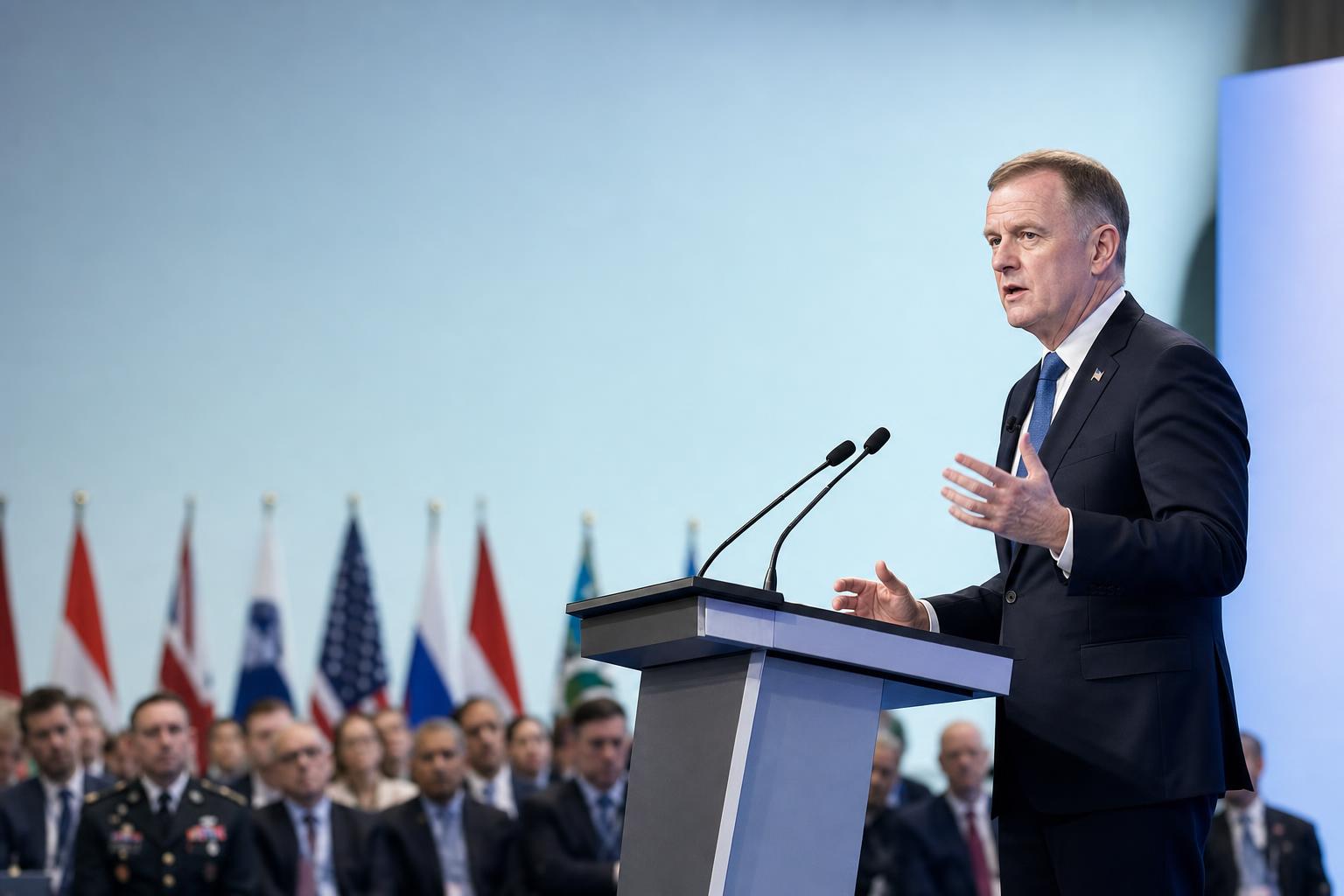
US Defense Secretary Pete Hegseth said on May 29, Singapore time May 30, in a speech at the Shangri-La Dialogue in Singapore that no nation, including China, can impose hegemony in the Indo-Pacific. While outlining the Trump administration's Asia security policy, he called on allies to share responsibilities.
Deterring China and maintaining stability
Hegseth said the United States is aiming for a 'truly stable balance' - an advantageous and sustainable balance of power that does not threaten the United States or its allies. He also said that as long as the status quo is maintained, the US can avoid confrontation with China and build a stable relationship.
Referring to the US-China summit held in Beijing on May 14-15, he said the two leaders agreed that 'the US and China should build a constructive relationship that brings strategic stability.' While he used less forceful language on China this time, he explicitly identified the 'First Island Chain' - linking Japan's Nansei islands, including Okinawa, with Taiwan and the Philippines - as a defense line, saying the US would 'build and maintain a strong denial defense posture that makes aggression impossible and war irrational in the western Pacific.'
Military dialogue and demands on allies
Trump and Chinese President Xi Jinping are considering holding up to four summits in 2026. Against that backdrop of leader-to-leader dialogue, Hegseth urged China to maintain dialogue between defense officials as well and to stabilize ties. 'By always keeping the communication channels open between military and military, we can avoid conflict and reduce the risk of miscalculation,' he said.
The Shangri-La Dialogue is attended mainly by defense ministers, but Chinese Defense Minister Dong Jun was absent for a second straight year. Since Hegseth took office as defense secretary in January 2025, no formal US-China defense ministers' meeting has taken place.
Turning to Asian allies, including Japan, he said, 'What we seek is an alliance based on burden-sharing, not dependence.' He warned allies that do not voluntarily shoulder their responsibilities for collective defense that he would 'clearly change our response.' On Japan, he praised it for taking 'concrete steps to accelerate defense reform' and said, 'It is not yet at the target, but the momentum is heading in the right direction.'
The United States is asking allies and partners around the world to raise defense spending to 5% of gross domestic product, or 3.5% under the current standard. The National Security Strategy and National Defense Strategy released by the Trump administration in late 2025 and January 2026 also made deterring Chinese aggression in the Indo-Pacific and defending the Western Hemisphere top priorities.
Enjoyed this article? Share it with your network!