





Asahi Kasei Among 30 Firms Eyeing SoftBank's New AI Venture
 2026-05-28
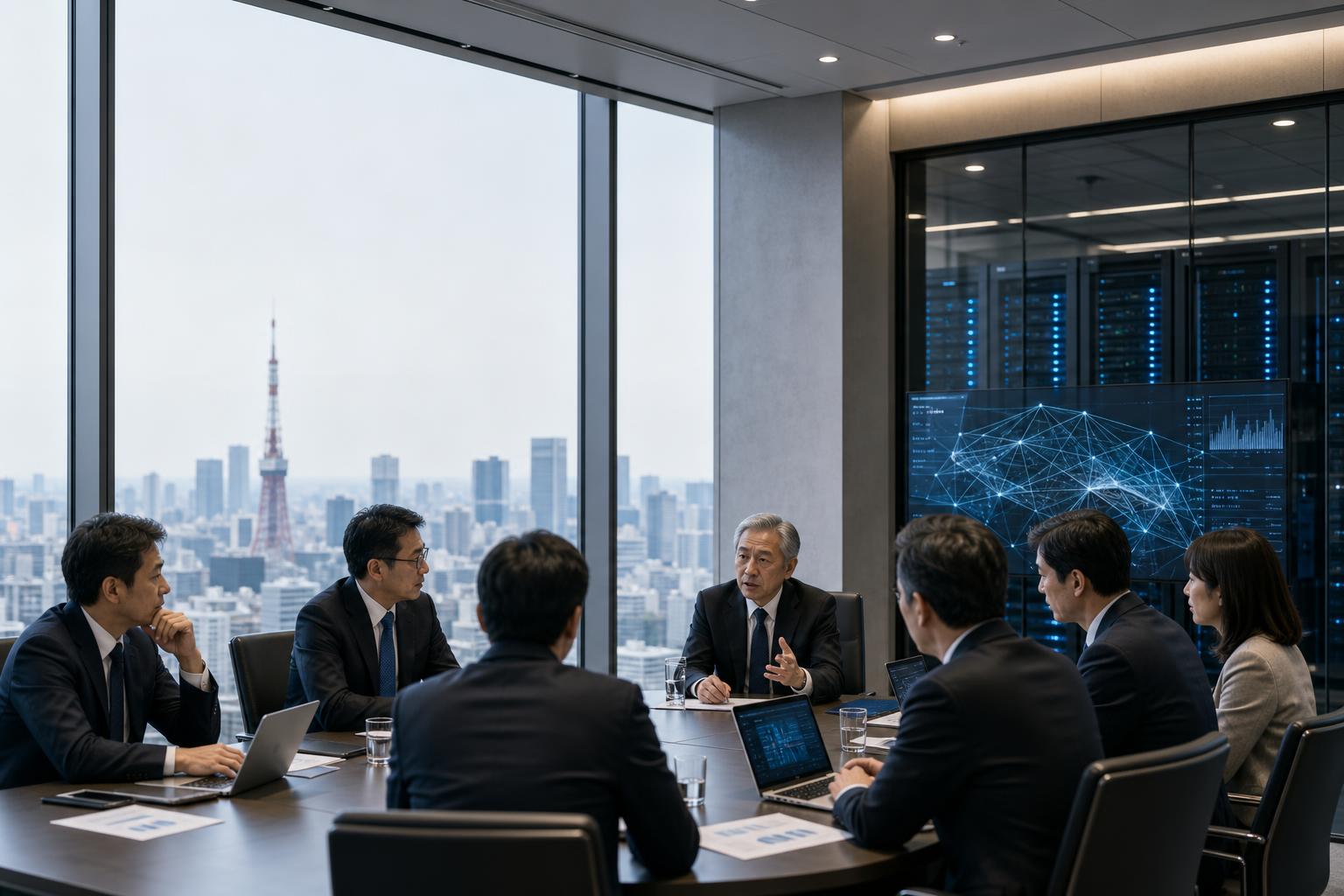
About 30 companies, including Asahi Kasei, are considering investing in a new company set up by SoftBank to develop homegrown AI, according to people familiar with the matter. Major manufacturers in chemicals and robotics, as well as big automakers and electronics makers, are exploring participation.
Manufacturing data seen as a competitive edge
While the US and China are ahead in AI model development, Japanese companies want to use data from factory floors as a strength. The aim is to boost the competitiveness of 'physical AI', which uses production and technical data from a broad range of industries, including materials and machinery, to autonomously control and operate machines and robots.
About 10 firms expected to invest first in June
Yaskawa Electric, Fujitsu and major heavy industry and transport companies are also considering investing in the new company's Japanese AI foundation model project. About 10 companies are expected to decide on investments in June, with each likely contributing several tens of millions of yen.
SoftBank, NEC, Honda and Sony Group are the core four companies behind the Japanese AI foundation model project, each holding more than 10%. In addition to the three megabanks, including MUFG Bank, Nippon Steel and Kobe Steel have also made small investments. Companies supporting manufacturing, such as those in materials, machine tools and logistics, are joining as well, with the aim of developing an AI platform that can be used across supply chains. As the range of tasks AI can handle expands, it will also become easier to make decisions with overall optimisation in mind.
The new company aims to develop one of Japan's largest AI large language models by 2027. It is targeting parameters on the scale of 1 trillion. By 2029, it plans to evolve the system so it can process different types of information, such as images and audio, at the same time, and in the early 2030s it aims to make the system capable of handling real-world information such as weight, temperature, position and distance in an integrated way.
The developed model will be made available to investors and others, helping spur the development of AI models and service platforms tailored to industries and individual companies. Big US and European tech firms complete model development on their own, making it difficult to reflect company-specific information such as machine tool operating conditions. The new company plans to differentiate itself by gathering high-quality data from manufacturing sites and improving physical AI performance.
Data centre planned in Sakai
The company will also build an environment where corporate data can be safely used for AI training. A data centre with one of the largest information processing capacities in Japan will be established at the former Sharp Sakai plant site in Sakai, which SoftBank acquired in 2025. It also plans to bring a computing platform built from large numbers of graphics processing units, or GPUs, into full operation as early as 2028.
The facility will house a computing platform capable of using the equivalent of 100,000 of Nvidia's H200 advanced AI chips. The related infrastructure is expected to cost 1 trillion yen. If the project is selected by NEDO, the government will take the lead in building the platform, while SoftBank will focus on operating the facility.
Huge investment continues in AI. Four major US tech companies, including Meta and Google, are expected to spend more than 100 trillion yen in total in fiscal 2026 on data-centre expansion and other infrastructure that underpins AI. SoftBank also plans major investment across its group, but there are limits to how far it can compete with US tech giants on its own. It intends to work with domestic manufacturers and leverage the strengths of Japanese companies.
The Liberal Democratic Party has also called in its proposal on the government's AI policy for focusing not on pursuing 'purely domestic' solutions across every field, but on task-specific AI that is useful in manufacturing and other workplaces. It is said that 60% of the data circulating globally is held by companies, and combining such data with tacit know-how from the field could accelerate AI use in advanced areas such as autonomous factory control. Making this happen will require building infrastructure that can safely train AI on company-specific information, such as machine tool operating conditions.
Enjoyed this article? Share it with your network!