





AI backlash underscores headwinds for SpaceX mega IPO
 2026-05-28
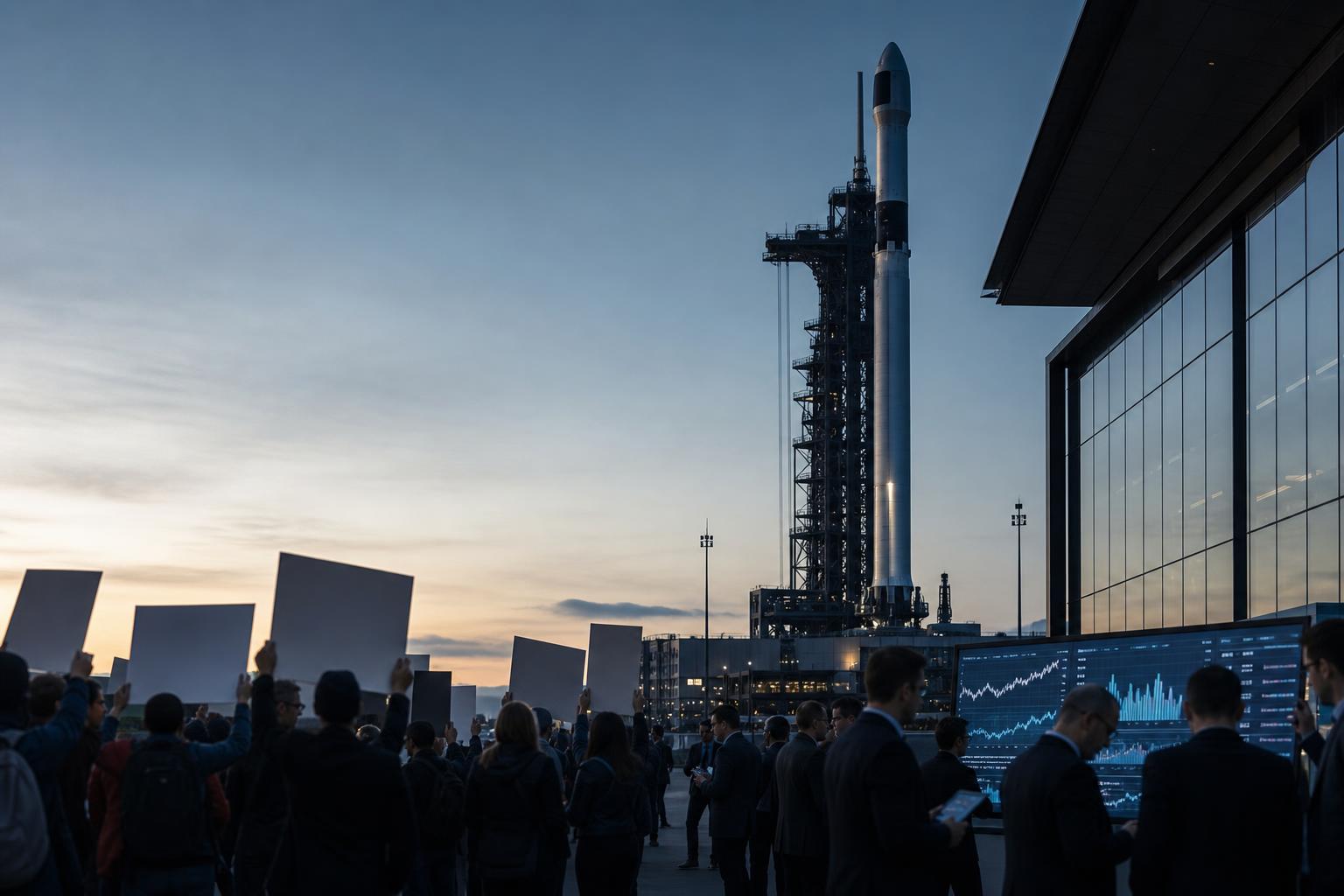
SpaceX's S-1, disclosed as part of its listing process, drew attention for the prospect of one of the biggest IPOs on record while also reflecting U.S. headwinds surrounding AI. The company, which is built around space development, communications and AI, is scheduled to list on the Nasdaq on June 12 and is expected to raise $75 billion (about 12 trillion yen).
Leading indicator for mega IPOs
According to Renaissance Capital in the U.S., the largest IPO to date was Saudi Aramco in 2019, which raised about $25.5 billion. Alibaba Group's 2014 listing and SoftBank's 2018 debut are also known as major IPOs, but among companies with many similarities to SpaceX, Facebook, now Meta, stands out.
When Facebook went public in 2012, there was a celebratory mood across Menlo Park. By contrast, SpaceX's S-1 explicitly listed AI as a business risk. It said that while most Americans use AI, they still do not trust it enough, warning that if public trust erodes, the adoption of its products and services could slow.
Growing caution over AI
In a March international comparison survey released by the Nomura Research Institute, more than 17% of respondents in the U.S. said they did not trust AI at all, above Japan, China and Germany. Concerns over the spread of misinformation, the promotion of discrimination and widening inequality lie behind that view.
In April, a Molotov cocktail was thrown at the home of OpenAI CEO Sam Altman in San Francisco. U.S. media reported that hatred toward AI was the motive. At a May 15 graduation ceremony at the University of Arizona, students also strongly pushed back against invited guest Eric Schmidt, the former CEO of Google.
U.S. venture investor Ben Horowitz said strong resentment over inequality has become linked with moves in the tech industry, leading the negative side of AI to be overstated. Arvind Narayanan, a Princeton University professor, also said much of the concern over AI is in fact dissatisfaction with capitalism.
Opposition to data centers too
There are also moves that place importance on AI research. At Google's developer conference this year, Demis Hassabis, head of its AI research division and a Nobel Prize winner, took the stage and cited improving health as a key use case for AI.
However, even data center development, a key use of funds outlined by SpaceX in its S-1, faces opposition. In a March survey by Gallup in the U.S., 71% of respondents said they opposed construction in their local area. The company also has a plan to deploy them in space, but the S-1 says that would not happen before 2028 at the earliest.
The mega IPO may create many new wealthy people, but it also shows that it could intensify caution toward AI and become an obstacle to business expansion.
Enjoyed this article? Share it with your network!