





U.S., Iran negotiate 60-day truce and Hormuz mine-clearing plan
 2026-05-26
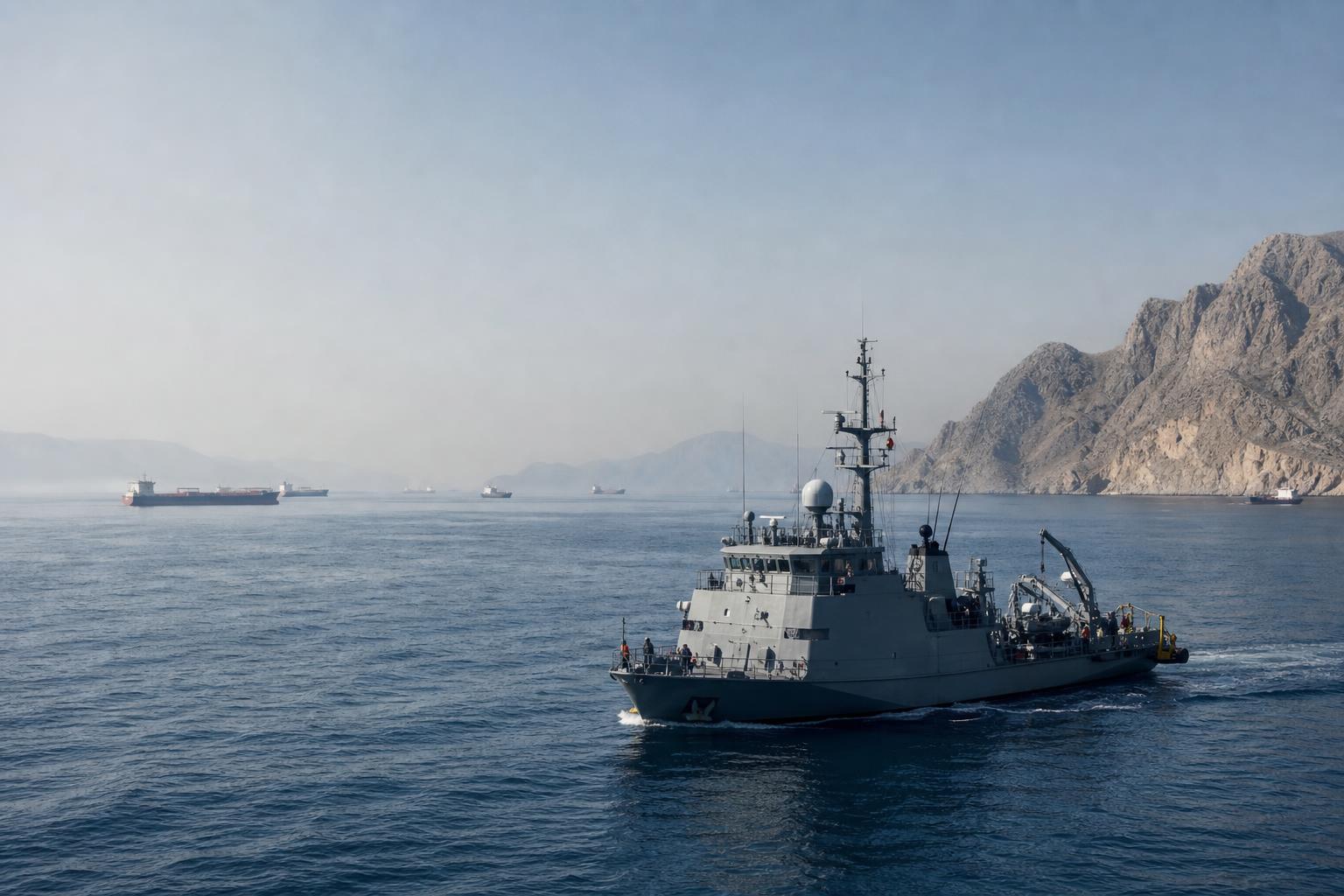
In talks aimed at ending hostilities between the United States and Iran, a proposal has emerged to extend the ceasefire by 60 days and clear mines from the Strait of Hormuz during the first 30 days. The goal is to restore free navigation for ships from all countries, as before the military clash.
Ceasefire and sanctions relief under discussion
According to Middle East diplomatic sources who spoke to Nikkei, the draft deal would have the United States and Iran pledge not to attack each other for 60 days. Lebanon would also be included in the scope of the ceasefire. The mine-clearing work would be completed around 30 days after the fighting stops, with the aim of reopening the Strait of Hormuz. Iran would not collect transit fees in the strait.
The United States would consider lifting sanctions on Iran and unfreezing assets if it can confirm that Tehran is complying with the deal. During the ceasefire period, the two sides would advance talks on the nuclear issue, including the handling of highly enriched uranium.
U.S. President Donald Trump posted on social media on the 25th that 'enriched uranium (nuclear dust!)' would be handed over to the United States immediately and destroyed, or destroyed in coordination with Iran at the site or another appropriate location.
Reopening of the Strait of Hormuz remains uncertain
Iran effectively sealed off the Strait of Hormuz in early March, when the military clash began. It set up a system to approve ships individually and charge transit fees, and continued to exercise effective control over the strait even after reaching a ceasefire agreement with the United States in early April. The number of transits, which was about 100 vessels a day before the clash, has recently been limited to just a few ships.
The United States and Iran are continuing detailed negotiations over the agreement. According to Iranian media, Parliament Speaker Mohammad Bagher Ghalibaf and Foreign Minister Abbas Araqchi visited Qatar, one of the mediating countries, on the 25th.
The outcome of the talks remains unclear. Some Republicans in the United States and Israel believe a hasty deal should be avoided. Trump said on the 23rd that a deal would be 'announced soon,' while on the 24th he wrote on social media that he had told the U.S. negotiating team not to rush into an agreement. Iranian Foreign Ministry spokesman Esmaeil Baghaei also said at a press briefing on the 25th that 'a signing of an agreement is not imminent.'
It is also still unclear whether freedom of navigation in the Strait of Hormuz will truly be restored. The number and locations of mines that Iran is believed to have laid around the strait are not known, and some say full removal could take months.
Britain and France discussed efforts to reopen the strait in mid-May, with around 40 countries including Japan taking part. Japan was represented by Defense Minister Shinjiro Koizumi, who discussed mine-sweeping operations and other measures.
On the 25th, Baghaei said that vessels passing through the Strait of Hormuz would not be asked to pay 'transit fees.' He also argued, however, that 'services provided come at a cost.' The aim appears to be to avoid the form of transit fees in an international strait, which are prohibited under international law, and to justify charging under a different name.
Enjoyed this article? Share it with your network!