





Oil inventories may fall below 100 days of demand by end-May
 2026-05-23
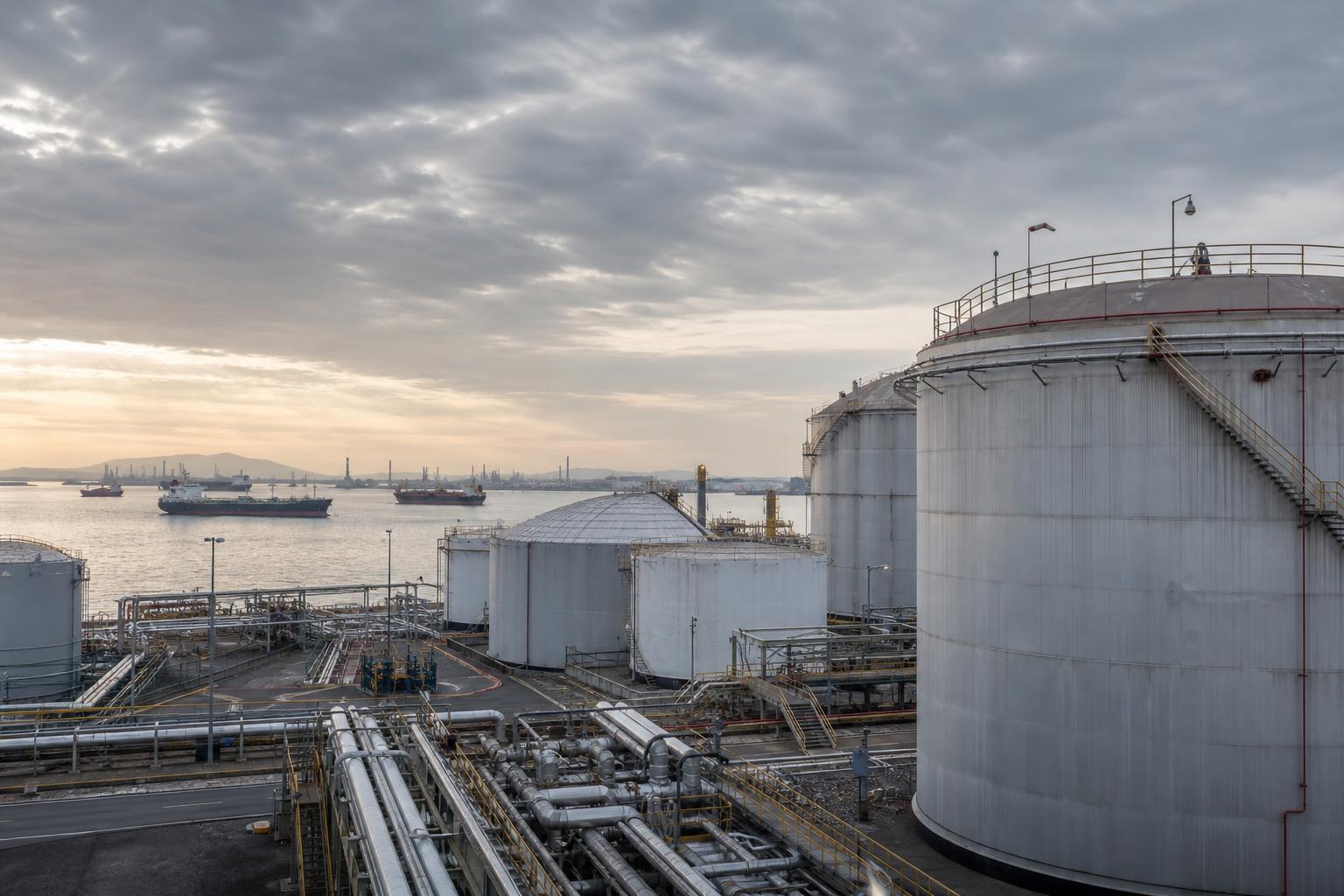
Global crude inventories are increasingly likely to slip below 100 days of demand by the end of May as restrictions on traffic through the Strait of Hormuz drag on and stock draws continue. While conservation measures are spreading across countries and regions, Japan is also being criticised for lagging behind in its response.
Global market sees inventories keep falling
US Goldman Sachs estimated global crude inventories, including commercial stocks and countries' strategic reserves. It said the total would fall to 101 days of demand at the end of April and to 98 days by the end of May.
Yuulia Zestkova and other commodity research analysts who carried out the estimate said that even if traffic through the Strait of Hormuz begins to recover immediately, normalisation would take at least several weeks. They expect inventories to keep falling through the end of June.
'Visible inventories', which can be confirmed through satellite data and other sources, are expected to stand at 73 days of demand at the end of May, below the 74 days seen in 2025, the lowest level since 2018. Adding 25 days of 'invisible inventories', mainly stocks in non-OECD countries that are difficult to track, brings the total to 98 days, Goldman calculated.
The level is also drawing closer to the 90 days of imports of reserves that the International Energy Agency requires member countries to hold.
Supply constraints persist
Coordinated releases by the IEA began in stages after March 11. Stock draws have helped restrain gains in crude prices. WTI, the benchmark US crude futures contract, has traded around $100 a barrel since briefly touching the $119 range on March 9, its highest level since 2022.
Expectations that the Strait of Hormuz could reopen soon, after remarks by US President Donald Trump and a ceasefire agreement between the US and Iran, have also weighed on prices. Even so, only a few oil tankers a day are actually transiting the strait, and the situation in which more than 10 million barrels a day of global supply is lost has not changed.
In a report dated the 20th, Goldman said visible global crude inventories were falling at an accelerating pace and that the average drop in May reached 8.7 million barrels a day, the largest on record.
Masato Maruyama, managing director at Goldman Sachs Securities, said concern over inventory declines is spreading among market participants, adding, 'If it spreads further, crude prices could spike at some point, and we are watching it closely.'
Japan lags in response
Ken Koyama, chief researcher at the Institute of Energy Economics, Japan, said rapid stock draws have bought the international oil market some time for now, but 'it cannot continue indefinitely.'
Another issue is that inventories on paper cannot necessarily be used as they are. Strategic crude reserves may include oil whose quality has changed over time. There are also physical constraints, such as difficulty discharging oil from tanks as remaining volumes decline.
The key focus is whether demand can be curbed before supplies recover. Indian Prime Minister Narendra Modi on the 10th called for crude conservation measures, including prioritising working from home and refraining from overseas travel for the next year. According to the IEA, governments in 54 countries and regions have introduced emergency energy-saving measures, with Asian countries that rely heavily on crude imports particularly prominent.
In Japan, by contrast, the government is not asking for demand restraint despite its high dependence on the Middle East. Yuki Togano, a researcher at the Japan Research Institute, said 'it is possible to balance this with economic growth and Japan should also promote energy saving,' adding that 'energy subsidies that prop up demand should be ended as soon as possible, and conservation should then be requested.'
Enjoyed this article? Share it with your network!