





SpaceX succeeds in test launch of next-generation Starship
 2026-05-23
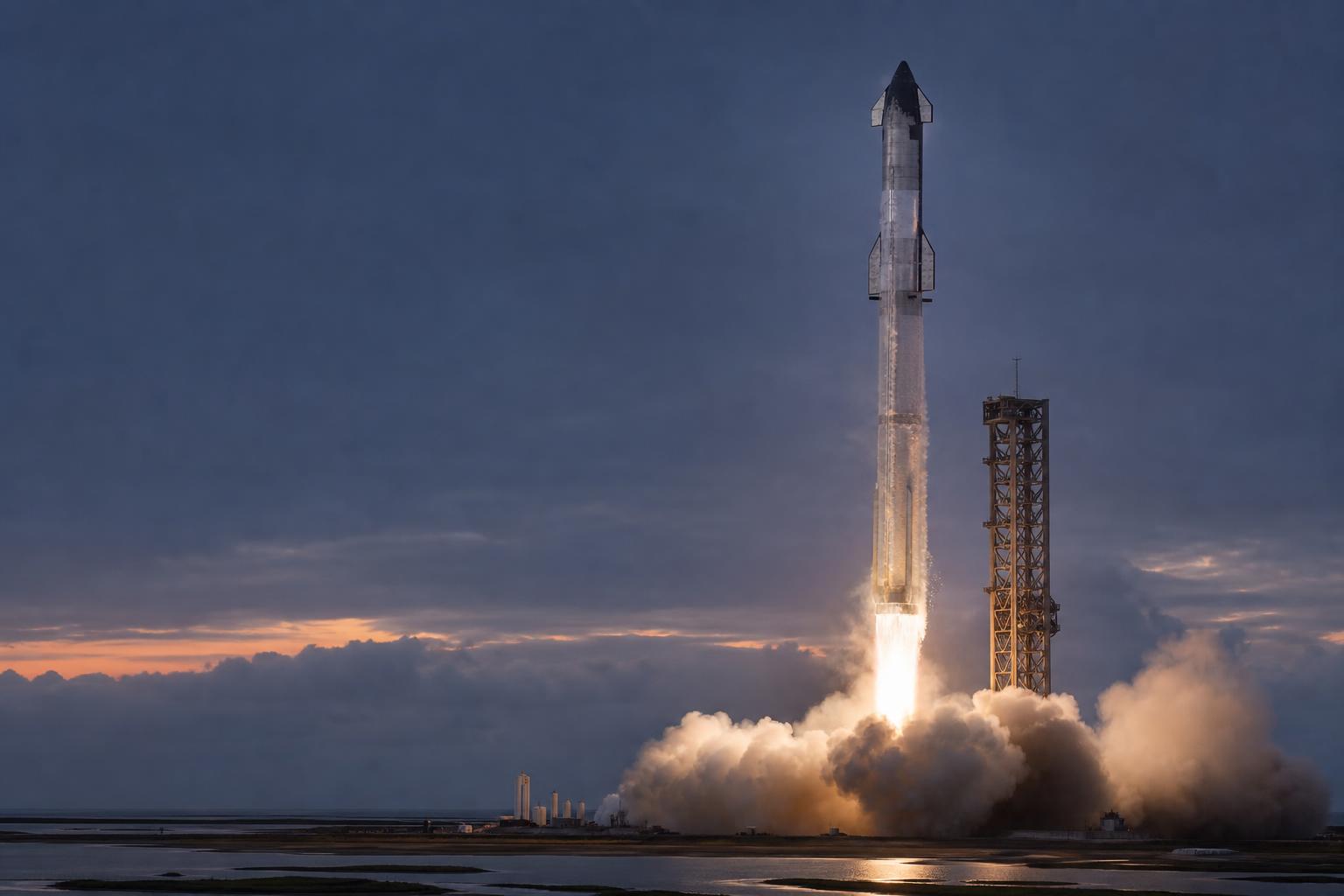
SpaceX on the 22nd successfully conducted a launch test of the next-generation version of Starship, one of the world's largest rockets. If put into practical use, it could carry four times as much payload into space as the company's current mainstay, Falcon 9, potentially bolstering its growth strategy.
12th launch from Starbase
The rocket lifted off from Starbase in Texas in the southern United States at 5:30 p.m. Central Time on the 22nd, or 7:30 a.m. on the 23rd in Japan. It was Starship's 12th launch since October 2025. It was the first test of what is described as the third-generation vehicle.
Upper stage splashes down, booster not recovered
The rocket's upper stage circled halfway around the Earth over about an hour before splashing down in the Indian Ocean. The lower-stage propulsion unit, the booster, is designed with reuse in mind, but it was not recovered this time.
Designed for 100-ton-class payload capacity
The third-generation Starship has higher engine thrust and improved transport capacity compared with the second generation. It can carry 100 tons to low Earth orbit, more than four times Falcon 9's 22.8 tons.
Potential use in Starlink and lunar exploration
If commercialized, SpaceX would be able to launch satellites for its Starlink communications network at lower cost. It also plans to use the rocket in building future artificial intelligence (AI) space data centers.
Starship is also slated to be used as a lunar lander in Artemis, the Moon exploration program led by the U.S. National Aeronautics and Space Administration (NASA). As US-China competition over lunar landings continues, expectations are rising for early practical use.
Enjoyed this article? Share it with your network!