





U.S. DEA official says Japan seen as transit point for fentanyl smuggling
 2026-05-22
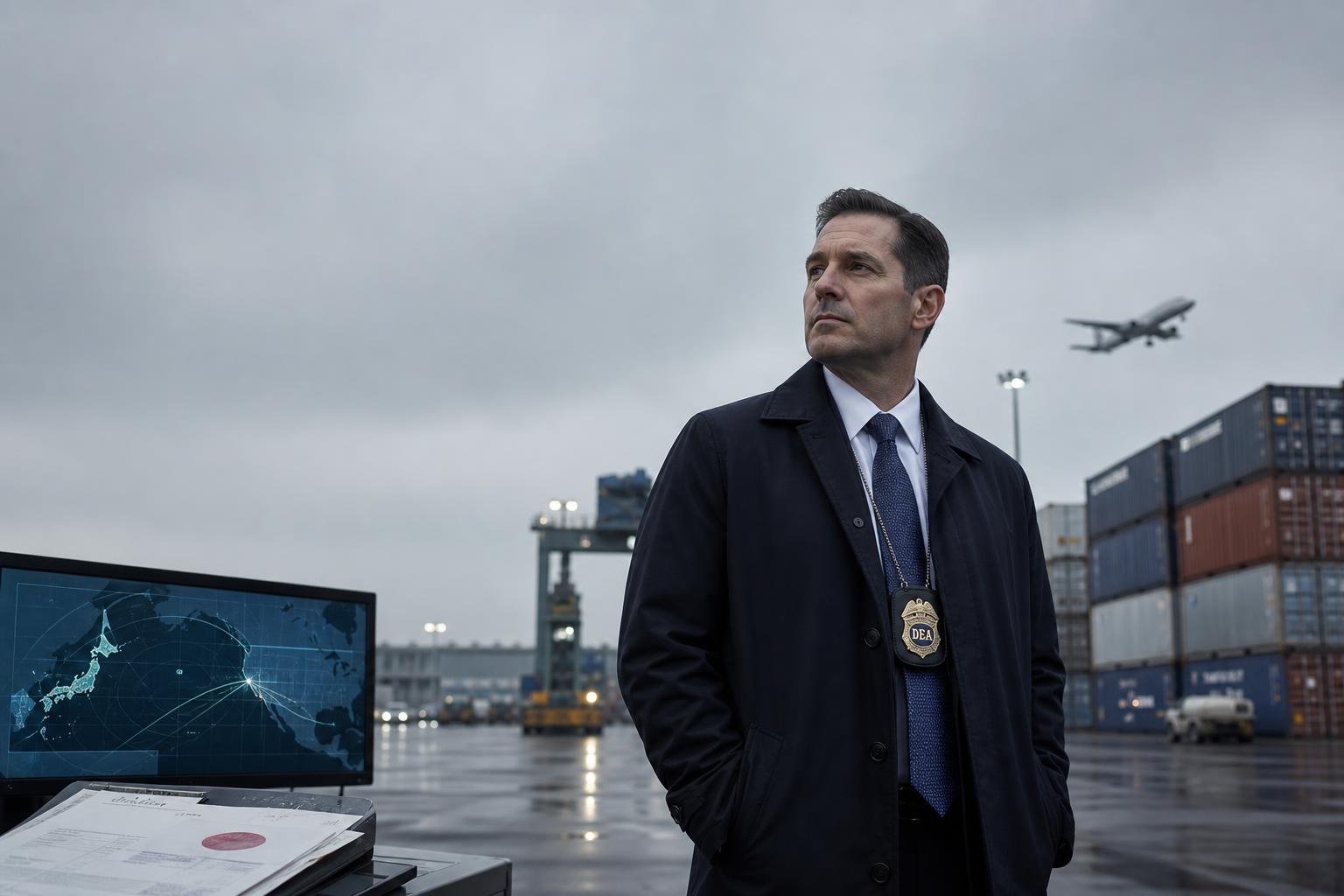
A senior official at the U.S. Drug Enforcement Administration (DEA) said on the 22nd that synthetic drug fentanyl is being smuggled into the United States via Japan. It is the first time U.S. authorities have explicitly described Japan as a transit point for fentanyl.
Japan is a transit point for smuggling
David King, DEA Asia Pacific chief, told Nikkei and others in an interview in Tokyo that Japan is functioning as a transit point for smuggling groups seeking to evade security checks. He said commercial cargo bound from Japan for the United States is not inspected as rigorously as shipments from China.
In the fentanyl smuggling case in the United States, China and Mexico have been seen as the main entry routes. The DEA, meanwhile, has been conducting a full-scale investigation on the basis that Japan has become a transit point, tracking a Chinese group’s base in Japan and the movements of a purported leader who allegedly directed illicit transactions from Japan.
View that Japan is not a manufacturing hub
King also said Japan is not a production base for fentanyl. He said raw materials are mainly produced in China and India, and that at present Japan is not regarded as the country of origin.
Nikkei reported in June 2025 that a Chinese group suspected of illegally exporting fentanyl may have had a base in Japan. The European investigative organization Bellingcat has also published similar analysis, and investigative agencies in various countries are working to identify the distribution routes.
Step up information sharing with the coast guard
On the same day, the DEA signed a memorandum of understanding with the Japan Coast Guard on cooperation in cracking down on drug smuggling, including fentanyl. Sea transport is regarded as a major method of narcotics smuggling, and the two agencies will facilitate information sharing to prevent fentanyl from entering the United States via Japan.
In the United States, the growing number of fentanyl users has become a social issue. U.S. Ambassador to Japan George Glass, who attended the signing ceremony, said, 'This issue is not only a challenge for the United States,' underscoring the importance of cooperation with Japan.
Hiroaki Koba, inspector-general of the Japan Coast Guard, said there have been no fentanyl-related arrests in Japan so far. He added that a mechanism for mutual information sharing with the DEA is needed.
Enjoyed this article? Share it with your network!