





US-Iran Talks Remain at Odds on Nukes and Hormuz
 2026-05-22
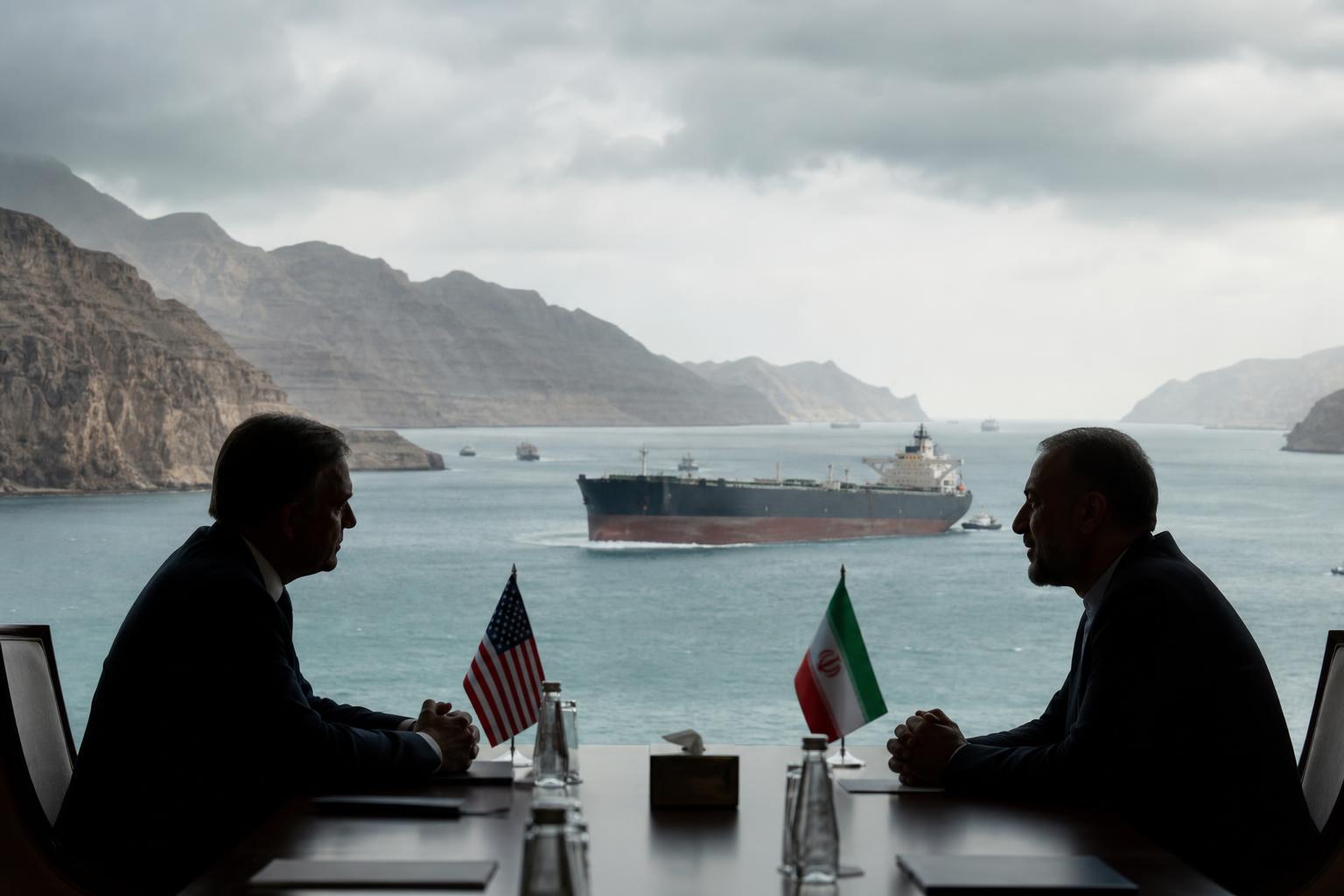
Talks may speed up via Pakistan mediation
Negotiations between the US and Iran to end hostilities continue to involve brinkmanship on both sides. Iran Students News on the 21st said the gap between the two countries has narrowed to some extent, but no further progress is likely unless the US abandons what it called a 'temptation for war'.
Iran is said to be reviewing a US proposal delivered through mediator Pakistan. Reuters reported that an Iranian official said on the 21st that while differences have narrowed, deadlock remains over uranium enrichment and control of the Strait of Hormuz. Iran appears to be seeking concessions from the US by leveraging its nuclear program.
US President Donald Trump, when asked by reporters on the 21st whether he was prepared to make concessions to the Iranian side, said, 'We are talking right now. We will see what happens,' indicating that the talks are entering a final phase. According to Iranian media, Pakistan's army chief, Field Marshal Munir, is expected to visit Iran soon, raising the possibility of more detailed coordination. On the 20th, Pakistan's Interior Minister Naqvi met Iranian President Pezeshkian and exchanged views on the latest US-Iran developments.
Nuclear program remains the main sticking point
The focus of the negotiations is Iran's nuclear program. In particular, tensions remain over the handling of highly enriched uranium inside Iran. The US has called for the removal of highly enriched uranium that could be converted into nuclear weapons. Trump said on the 21st, 'We are going to get it. They are not going to have it.'
Iran, by contrast, is said to have proposed diluting the material domestically. Reuters reported on the 21st, citing two Iranian officials, that Supreme Leader Mojtaba Khamenei had instructed that the highly enriched uranium not be taken out of the country. In a statement in late April, Khamenei said, 'The Iranian people view nuclear and missile technology as national assets.'
Khamenei has not appeared in public, with reports saying he was wounded in US and Israeli attacks. However, in April he was reported to be recovering and involved in talks with the US. In May, reports of his movements have increased, including that he met with President Pezeshkian.
Controls on Hormuz are also being tightened
While showing no willingness to compromise on nuclear development, Iran is also building a framework to manage traffic through the Strait of Hormuz, which it effectively controls. The Persian Gulf Strait Authority, or PGSA, which Iran established to oversee passage through the strait, on the 20th published on social media a map showing its controlled area.
The map defines the western boundary as a line connecting the tip of Iran's Qeshm Island with Umm Al Quwain in northern the United Arab Emirates, and the southern boundary as a line connecting Iran's Mount Mobarak with Fujairah in eastern UAE. Fujairah is a key oil export hub for the UAE. PGSA says passage through the strait requires coordination with Iranian authorities and that transit without permission is illegal.
US Secretary of State Marco Rubio told reporters on the 21st that Iran charging transit fees for passage through the Strait of Hormuz is 'completely illegal'. He said China also opposes the levy and stressed that 'no country in the world supports a toll system'. He added that if Iran moves ahead with the policy, a deal will be hard to reach. Trump also said the same day that the charge was 'undesirable' and that 'it is an international waterway'.
Enjoyed this article? Share it with your network!