





Takaichi and Lee to Agree on Joint Oil Reserves, Using Power Asia
 2026-05-19
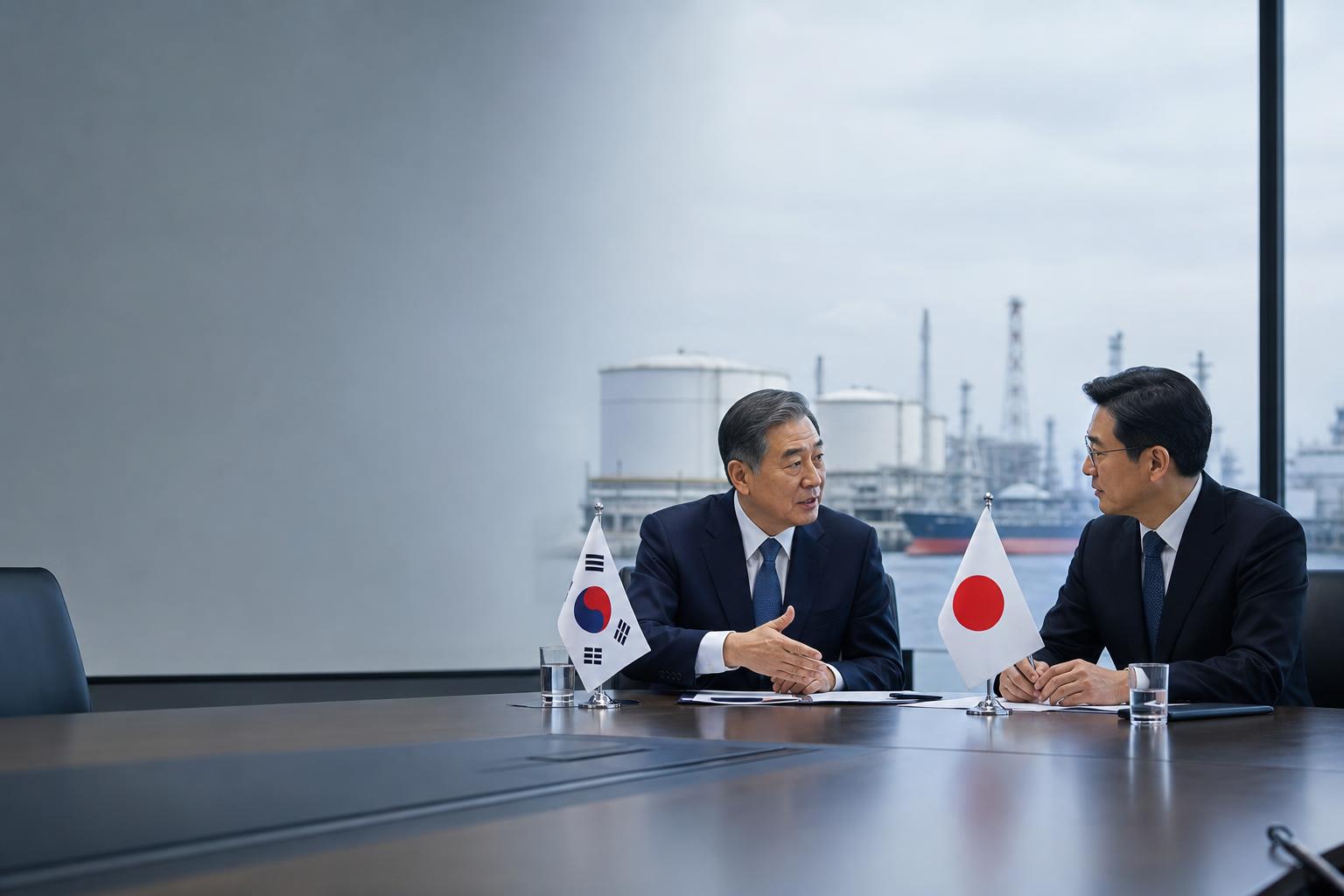
Crude Oil Procurement
At the Japan-South Korea summit on the 19th, Prime Minister Sanae Takaichi and South Korean President Lee Jae-myung will agree to build a cooperation framework, including joint reserves, for crude oil procurement. They will use “Power Asia,” an energy cooperation framework with Southeast Asia launched under Japanese leadership.
The prime minister will visit South Korea from the 19th to the 20th as part of shuttle diplomacy. The summit will be held in Andong in southeastern South Korea, Lee’s hometown.
Power Asia was proposed by the prime minister in April. It is a plan to support efforts by Asian countries with limited oil reserves to strengthen their systems. When Asian companies procure crude oil from outside the Middle East, financing will be provided through the Japan Bank for International Cooperation (JBIC) and others. In addition to financial support, Japan and South Korea will also work on technical support to build reserve systems.
Securing Naphtha
Concerns are growing worldwide over supply shortages of naphtha, a petroleum product used as a raw material for medical supplies and other goods. By supporting crude oil supplies to Southeast Asian countries, which provide medical supplies, they aim to secure related materials.
Both Japan and South Korea lack domestic resources and depend on crude oil imports from the Middle East. By showing support for Southeast Asia, which struggles to secure crude oil, they aim to raise their presence in Asia. It is also expected to contribute to the results of Japan-South Korea pragmatic diplomacy.
Instability in the Middle East is also affecting relations with the United States, an ally of both Japan and South Korea. There is concern that if U.S. attention becomes too focused on the Middle East, its engagement with Asia will weaken. There are also lingering concerns that the United States may move closer to China, affecting East Asia’s security environment.
Coordination on China
The two leaders are also expected to share information about the talks held in Beijing on the 14th and 15th between U.S. President Donald Trump and Chinese President Xi Jinping. The prime minister and Lee each received phone briefings from Trump about his meeting with Xi.
Japan also expects cooperation from South Korea in economic security and defense, with China in mind. To deter China, Japan is also deepening ties with like-minded countries such as Australia and the Philippines. South Korea is also a U.S. ally, and Japan wants to bring it into these frameworks. The Acquisition and Cross-Servicing Agreement (ACSA) and an agreement on the transfer of defense equipment are also under consideration.
China-South Korea relations have long remained cold, partly due to issues such as the deployment of interceptor missiles by U.S. forces in Korea. The Lee administration is seeking improvement, but public distrust of an assertive China remains strong.
Shuttle diplomacy began in 2004, when then Prime Minister Junichiro Koizumi and President Roh Moo-hyun started it. Due to disputes over history and Takeshima sovereignty, there were long periods when mutual visits stopped. Most recently, it was suspended for 11 years after President Lee Myung-bak landed on Takeshima in 2012.
Until now, the United States has often played the role of mediator in the frequently tense Japan-South Korea relationship. U.S. forces in Korea and Japan are operated jointly, making Japan-South Korea coordination essential. Recently, the pattern has been shifting toward voluntary rapprochement between the two countries. Trump is less interested in multilateral cooperation, and the annual summit meeting Japan, the United States, and South Korea agreed on in 2023 remains stalled.
South Korea is facing local elections on June 3. Lee Jae-myung was once a progressive politician who took a hard line toward Japan, but since taking office as president in 2025, he has promoted “pragmatic diplomacy” and sees practical benefits in improving ties with Japan. This visit by the prime minister is also being realized at South Korea’s request.
Enjoyed this article? Share it with your network!